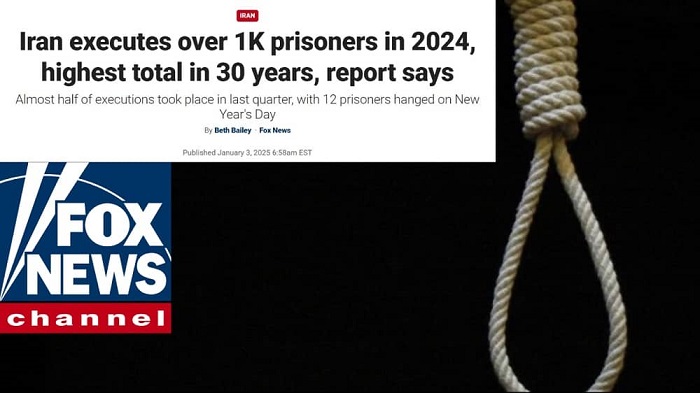
According to the National Council of Resistance of Iran (NCRI), this represents a 16% increase from the 864 executions recorded in 2023. The rise highlights the Iranian regime’s growing reliance on executions as a tool to suppress dissent and maintain control amidst intensifying domestic unrest and regional setbacks.
The NCRI’s report underscores a sharp uptick in executions following the July election of President Masoud Pezeshkian. Nearly 70% of the executions occurred during his tenure, with 47% concentrated in the year’s final quarter. Notably, on New Year’s Day 2025 alone, 12 prisoners were executed across four prisons, signaling the regime’s continued use of capital punishment as a political weapon.
The executions have disproportionately targeted vulnerable groups, including ethnic minorities like the Baluchis and Kurds, as well as women and juveniles. Among the victims were 34 women and seven individuals convicted for crimes committed as minors, violating international prohibitions on the execution of juveniles. Additionally, 70 Afghan nationals and 119 Baluchi individuals were executed, reflecting the regime’s intensified crackdown on marginalized communities, particularly since the 2022 protests ignited by Mahsa Amini’s death.
The Iranian regime executed at least 1,000 prisoners in 2024, the highest tally in 3 decades, per @iran_policy
This included 119 from the Baluch minority, 70 Afghans, 34 women, and 7 juvenile offenders.For more, see my latest at Fox News:https://t.co/dgLUhml4yg
— Beth W. Bailey (@BWBailey85) January 3, 2025
Maryam Rajavi, the NCRI’s President-elect, condemned these acts as “medieval crimes” and called for international accountability. She urged world leaders to condition any diplomatic negotiations with Tehran on an immediate halt to executions and torture. “These desperate attempts to suppress an angry populace will only strengthen the resolve of Iran’s youth to overthrow the regime,” she stated, emphasizing the need to hold Iran’s leaders accountable for decades of human rights abuses.
The executions extend beyond political dissidents, targeting non-violent offenders and individuals accused of minor infractions, such as drug possession. Public hangings, often conducted in the presence of children, serve as a brutal means of instilling fear within the population. One particularly controversial case involved Jamshid Sharmahd, a 69-year-old German citizen and U.S. resident, whose execution in October 2024 sparked international condemnation.
Political prisoner Saeed Masouri revealed in an open letter that executions occur at an average rate of one every four hours, creating a harrowing atmosphere for those awaiting their fate. He described the psychological toll, with every sound of a prison door evoking the fear of impending death.
Iran executes over 1K prisoners in 2024, highest total in 30 years report says https://t.co/ctfy0SZqC6
— Fox News (@FoxNews) January 3, 2025
The NCRI’s findings have prompted global outcry from human rights organizations and political leaders, who are calling for urgent measures to curb Iran’s escalating human rights abuses. With an average of nearly three executions daily, the regime’s actions underscore its desperation to suppress dissent and maintain power amid growing calls for democratic reform and justice.

MEK Iran (follow us on Twitter and Facebook), Maryam Rajavi’s on her site, Twitter & Facebook, NCRI (Twitter & Facebook), and People’s Mojahedin Organization of Iran – MEK IRAN – YouTu