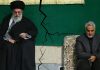
Assadi, previously imprisoned in Germany and Belgium, criticized the conditions of his detention, alleging severe violations of his rights. Kazem Gharibabadi, head of the judiciary’s Human Rights Office, joined Assadi in condemning Germany and Belgium for treating the diplomat. Gharibabadi, whose role includes defending the human rights record of Iran’s judiciary—an institution noted for having the world’s highest execution rate relative to its population—spoke out against the European countries’ actions.
“During the time Mr. Assadi was imprisoned in Germany and Belgium, the injustices inflicted upon this Iranian diplomat by these so-called human rights advocates were occasionally reported, but very rarely,” Gharibabadi stated. “We have tried to expose some of these instances through human rights and media mechanisms. The country that claims to champion human rights has violated all basic human rights principles in its treatment of someone unjustly detained, from the right to family contact to the right to worship, health and hygiene, proper prison conditions, and various forms of psychological torture.”
Asadollah Assadi, a high-ranking intelligence officer at the Iranian regime’s embassy in Vienna, was arrested by German police for organizing a bomb plot targeting the 2018 annual meeting of the National Council of Resistance of Iran near Paris. Assadi was extradited to Belgium and sentenced to twenty years in prison by the Antwerp court, along with three operatives who worked under him. The Iranian regime employed hostage-taking tactics to pressure the Belgian government, ultimately leading to Assadi’s controversial release.
During the press conference, Assadi claimed, that “an unprecedented legal violation occurred,” asserting that “an Iranian diplomat with diplomatic immunity was unlawfully detained.” He added, “My right to communicate with my family was unjustifiably ignored. In five years, I had no visits from my family and was only allowed to speak with them for one year. Furthermore, I had no access to the media or the outside world.”
Asgar Jalalian, Deputy for International Affairs and Human Rights at the Ministry of Justice, echoed Assadi’s sentiments, stating, “These are part of the injustices faced by the Islamic Republic of Iran. We have 8,000 foreign prisoners in our country who are not transferred due to the good prison conditions. We provide the best human rights conditions for convicts within the country, yet we are constantly accused of human rights violations.”
Despite these claims, the Iranian regime has been criticized for increasing executions to suppress public dissent and for harassing women and girls under mandatory hijab laws. The regime’s accusations against Western countries highlight a contentious exchange of human rights criticisms.
The Western policy of appeasement has led to ongoing tensions, with Iran continuing to engage in hostage-taking and terrorism. Assadi’s release underscores the complex geopolitical dynamics and the persistent challenge of addressing human rights abuses while navigating international diplomacy.

MEK Iran (follow us on Twitter and Facebook), Maryam Rajavi’s on her site, Twitter & Facebook, NCRI (Twitter & Facebook), and People’s Mojahedin Organization of Iran – MEK IRAN – YouTu