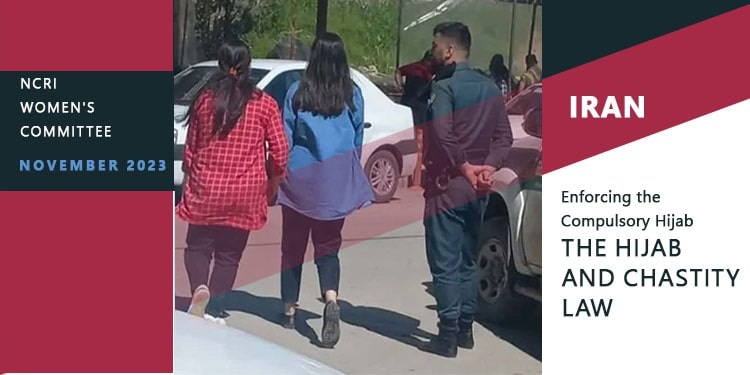
This enforcement indiscriminately affects women of all ages, backgrounds, and regions, with the state-sanctioned violence deeply institutionalized in law.
The compulsory veil, a long-standing contentious issue in Iran, has seen escalating brutality from the regime’s agents, particularly against those resisting its imposition. The death of Zhina (Mahsa) Amini last year, following a violent arrest by Morality Police, and the recent killing of 17-year-old student Armita Geravand by Hijab monitors, spotlight the regime’s ruthless crackdown.
In response to these incidents, the regime’s security and intelligence forces swiftly intervened to curb potential nationwide protests, indicating their fear of widespread dissent.
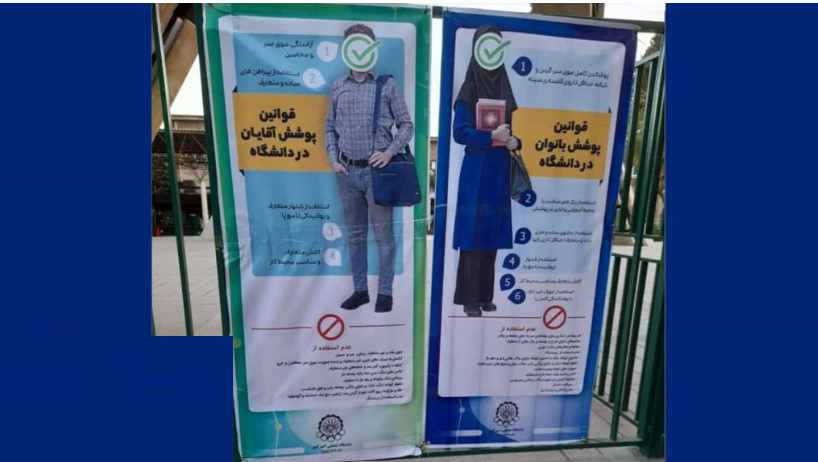
The National Council of Resistance of Iran (NCRI) Women’s Committee’s latest report delves into this new law’s implications. Notably, the Governorate of Qom’s recent directive, mandating female government employees to wear the black chador and forbidding makeup, marks a stringent enforcement of the law (reported by state-run didbaniran.ir on December 2, 2023).
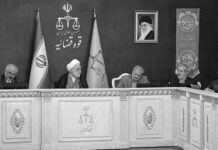
The “Protection of Hijab and Chastity” Bill, initially proposed by the Iranian Judiciary, underwent several iterations before its current form. Renamed “Supporting Hijab and Chastity,” the bill, comprising 70 articles, was initially criticized for focusing solely on penalties. After parliamentary revisions and an open session vote on September 20, 2023, it was adopted for a three-year trial period, subject to Guardian Council approval.
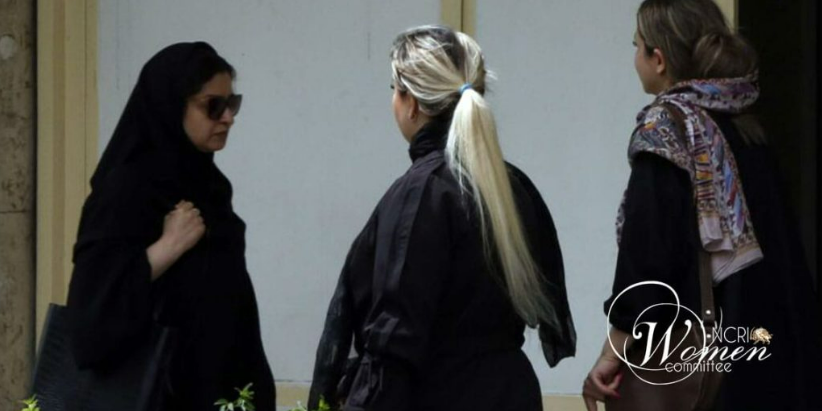
It also outlines severe punishments and fines for non-compliance, extending to cyberspace and social media. Alarmingly, the regime has already implemented stringent rules from the bill, evidenced by the deployment of 2,850 Hijab Monitors in Tehran’s metro stations, as reported by Etemad daily newspaper on November 26, 2023.
The bill’s enforcement extends to universities, with increased restrictions and monitoring, leading to student protests and strikes. Punitive measures for non-compliance have been severe, including job terminations and extreme penalties.
International condemnation of the bill has been vocal. The UN Human Rights Council experts labeled it as potentially constituting “Gender Apartheid,” urging Iran to reconsider the legislation in line with international human rights standards.
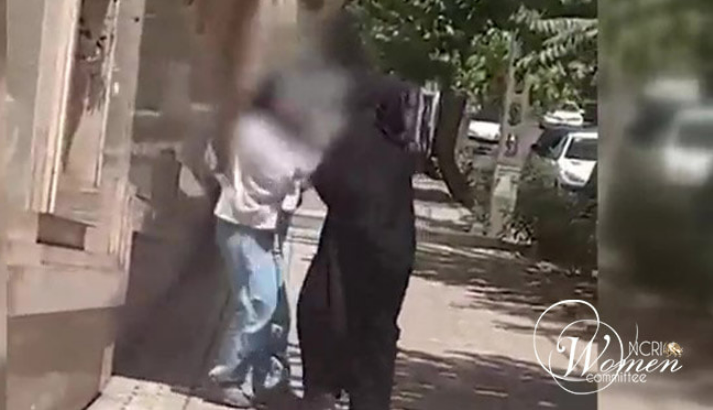
In conclusion, Iran’s new Hijab and Chastity Law not only highlights the regime’s paradoxical stance on women’s rights but also raises significant human rights concerns. The international community’s censure and Iranian women’s continued resistance are pivotal in shaping the future discourse on this critical issue.

MEK Iran (follow us on Twitter and Facebook), Maryam Rajavi’s on her site, Twitter & Facebook, NCRI (Twitter & Facebook), and People’s Mojahedin Organization of Iran – MEK IRAN – YouTu