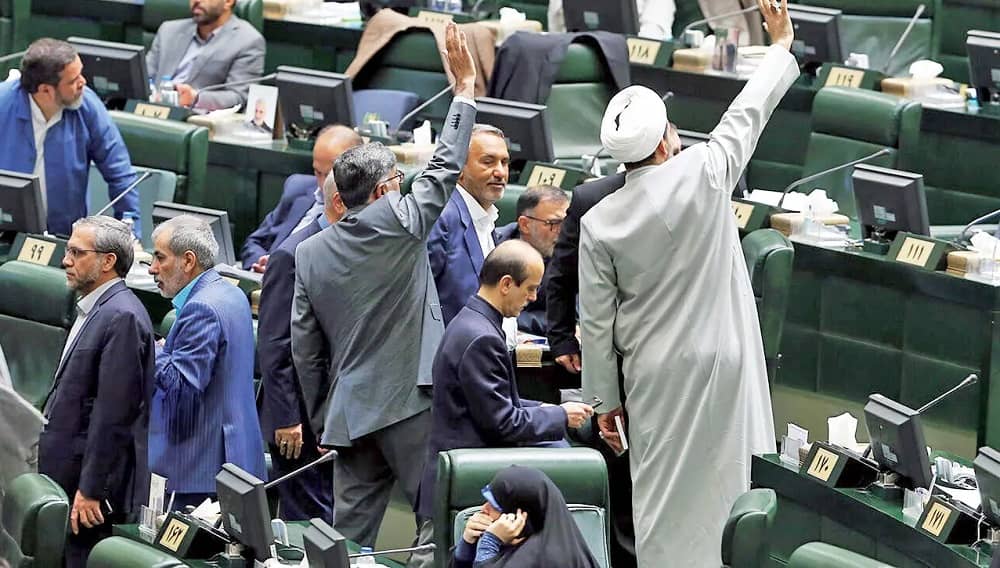
Deepening economic turmoil and a rapidly devaluing currency have intensified internal strife within the Iranian regime, as parliamentary members clash over the government’s handling of the financial crisis. With inflation soaring, public discontent rising, and the exchange rate exceeding 92,000 tomans per U.S. dollar, tensions erupted during an extraordinary parliamentary session on February 18, exposing severe fractures within the ruling elite.
Originally convened to address currency fluctuations and economic hardships, the session quickly devolved into a battleground of accusations and power struggles. Ahmad Naderi, a prominent lawmaker, revealed that 91 members of parliament had signed a motion to impeach Economy Minister Abdolnaser Hemmati, with the impeachment hearing scheduled for March 2. However, rather than engaging in open debate, MPs held a closed-door session with the regime’s president, ministers, and economic advisors—a move that outraged many within the assembly.
Zarif's Davos Remarks Ignite Infighting Within #Iran's Regime Over US Negotiationshttps://t.co/zyfEGr3lKu
— NCRI-FAC (@iran_policy) January 26, 2025
Ali Shirinzad, a lawmaker critical of the lack of transparency, denounced the secrecy: “This session was held without coordination with representatives, while the people expect us to impeach the economy minister. Such actions undermine public trust and weaken parliament’s authority.”
The political turmoil has only intensified, with some factions pushing for even harsher measures against Hemmati. Influential MP Hamid Rasaee of the Paydari Front called for legal action rather than impeachment, stating, “Do not impeach Hemmati—put him on trial! This is the only way to face history and stand honorably before the people!” Others, including Ahad Biouteh, directly blamed Hemmati’s policies for the freefalling currency, skyrocketing food prices, and economic instability.
Meanwhile, the crisis is having dire consequences for Iranian citizens. Reports indicate that between 350 and 450 essential medications are in short supply due to government mismanagement, with pharmacies and hospitals threatening to halt services starting March 1. MP Mohammad Jamalian warned that this could trigger a national security crisis.
As the economic disaster unfolds, Supreme Leader-affiliated factions have escalated attacks on rivals, including presidential deputy Javad Zarif and former Vice President Masoud Aref, accusing them of Western allegiances. Lawmaker Mohammad Nikbin targeted President Masoud Pezeshkian’s administration, urging him to purge alleged pro-Western politicians: “Mr. Pezeshkian, remove the Trump-lovers and America-worshippers from your administration!”
#Iran’s Clerical Regime Engulfed in Infighting Amid #Economic Collapse and Public Discontenthttps://t.co/i19E18Q8x6
— NCRI-FAC (@iran_policy) January 7, 2025
While the political elite battles within, Iran’s economy is in freefall, with inflation at its highest in decades, widespread food insecurity, and deteriorating public trust. Despite these crises, the regime continues to prioritize military rhetoric over economic relief.
On February 17, IRGC Deputy Commander Ali Fadavi hinted at further military actions, warning that the operation dubbed “True Promise III” could be executed at any moment. Hardline operative Hossein Allahkaram even suggested that Iranian missiles could target the United States, reflecting the regime’s increasingly aggressive posturing.
As Iran teeters on the brink of collapse, its leadership remains embroiled in internal disputes and external aggression. The coming weeks will reveal whether the government can navigate its economic freefall or if the mounting instability will lead to deeper fractures within the regime.

MEK Iran (follow us on Twitter and Facebook), Maryam Rajavi’s on her site, Twitter & Facebook, NCRI (Twitter & Facebook), and People’s Mojahedin Organization of Iran – MEK IRAN – YouTu