Announced on August 1, the appointment has been met with significant backlash, raising doubts about Pezeshkian’s loyalty to Supreme Leader Ali Khamenei and highlighting Zarif’s controversial return to government, despite his prior claims of stepping away from politics.
The directive emphasized the importance of closely monitoring and reporting on the Supreme Leader’s policies, underscoring the high stakes of the position.
“With the responsibility of overseeing the tasks and duties of the Center for Strategic Studies of the Presidency, you are to transform these into appropriate structures for the Strategic Deputy role and directly report on the approved vision document and general policies of the Supreme Leader,” Pezeshkian stated.

The appointment has not gone unnoticed by key players within the regime. The Islamic Revolutionary Guard Corps (IRGC)-affiliated media quickly voiced their concerns, branding Zarif as a potential “spy” and expressing deep mistrust regarding his re-entry into government. The IRGC-run outlet quoted users stating, “We did not have a Strategic Deputy before. Zarif promised he wouldn’t take a post. From now on, we have to be careful about everything because the spy is back.”
Zarif responded to the criticism by reiterating his initial reluctance to accept the position, citing public pressure as the reason for his change of heart. He assured that his role would be purely advisory, with no additional bureaucracy or overlap with existing institutions. “There will be no new bureaucracy, no overlap with existing agencies, no weakening of any institutions,” he assured.
Internal Tensions and Security Concerns in #Iran Amid High-Profile Assassinationshttps://t.co/oowQKJ6N0W
— NCRI-FAC (@iran_policy) August 2, 2024
However, Zarif’s appointment is not the only one causing controversy. Pezeshkian’s selection of Ali Tayebnia as his senior advisor and Hamid Pourmohammadi as head of the Planning and Budget Organization has also raised eyebrows. Pourmohammadi’s past imprisonment for financial misconduct and Tayebnia’s long history in government positions under previous administrations have led some to question Pezeshkian’s judgment.
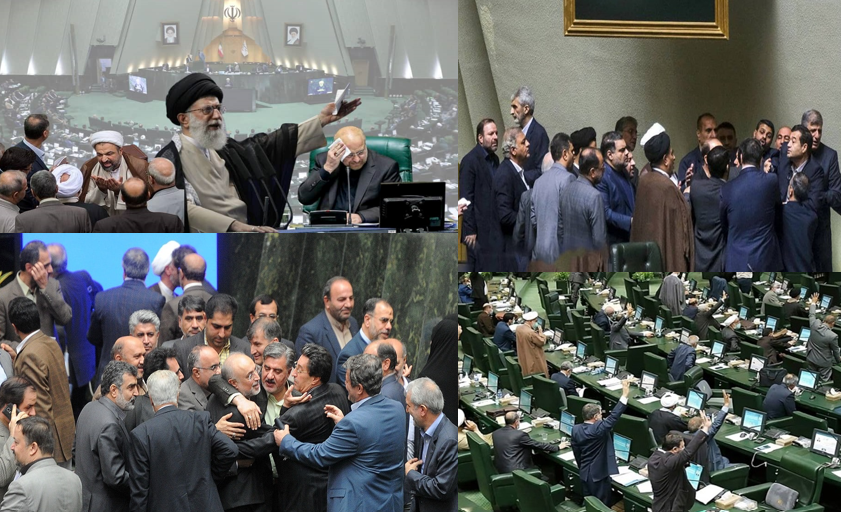
Adding to the controversy, Shahram Dabiri’s appointment as Deputy for Parliamentary Affairs has also been met with criticism, particularly given his previous arrest on financial charges. The appointments have prompted harsh critiques from within the regime, with Mohammad Javad Hojjati Kermani, a member of the Council of Experts, labeling the appointees as “revolutionary parasites.”
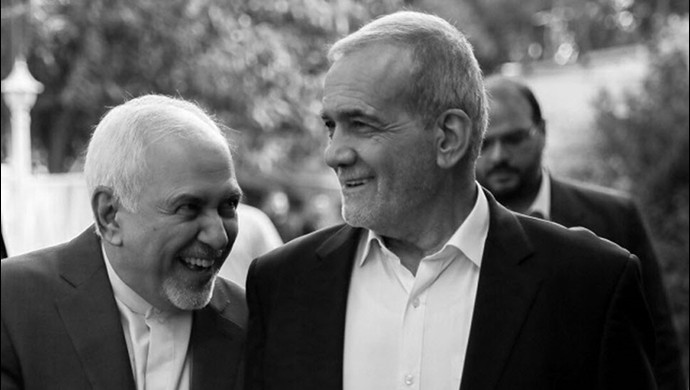
As factions within the regime continue to clash over these appointments, the future stability of Pezeshkian’s presidency remains uncertain.

MEK Iran (follow us on Twitter and Facebook), Maryam Rajavi’s on her site, Twitter & Facebook, NCRI (Twitter & Facebook), and People’s Mojahedin Organization of Iran – MEK IRAN – YouTu