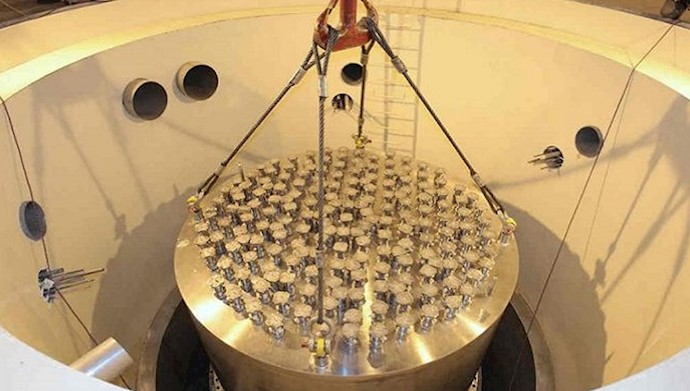
A report from the Defense and Strategic Research Committee of the NCRI on October 14, 2024, discloses that Supreme Leader Ali Khamenei has directed the Islamic Revolutionary Guard Corps (IRGC) to hasten the development of a nuclear bomb, signaling an alarming shift in Iran’s nuclear trajectory. 
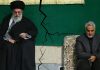
For years, Khamenei’s 2010 fatwa, which declared the development and use of nuclear weapons as forbidden under Islamic law, was seen as a barrier to Iran’s nuclear ambitions. His declaration at the time stated, “We do not believe in nuclear weapons, and we will not seek them. According to our religious and ideological principles, the use of such weapons of mass destruction is prohibited.” However, the NCRI now asserts that the fatwa was a strategic ruse to deceive the international community while secretly advancing the nuclear program.
Iran’s nuclear activities, long suspected of being concealed from the international eye, have been monitored by the NCRI for over three decades. The organization has exposed uranium enrichment facilities and other elements of Tehran’s clandestine operations, reinforcing the argument that Khamenei’s fatwa was a cover for deeper nuclear ambitions. Recent IRGC documents obtained by the NCRI reveal growing internal pressure to revise Iran’s nuclear doctrine. Senior cleric Hassan Khomeini has publicly called for increased military deterrence, suggesting that a nuclear-armed Iran is becoming an accepted notion within certain regime circles.
Further fueling concerns, a letter signed by 39 members of Iran’s parliament on October 9, 2024, urged a shift in defense policy to include nuclear weapons. Some Iranian lawmakers argue that building a nuclear arsenal is essential for national security and deterrence in an increasingly hostile regional environment. Mohammadreza Sabaghian, a parliament member, openly stated that “Building a nuclear weapon is necessary for creating deterrence and ensuring national security.”
Once again, I call upon the international community, particularly the European Union, to adopt a firm stance toward the Iranian regime—essential for achieving peace and stability both regionally and globally. Such a policy should encompass the following:
-Designating the clerical… pic.twitter.com/m48KyHq2d4— Maryam Rajavi (@Maryam_Rajavi) October 14, 2024
As debate rages within Iran, the NCRI has intensified its warnings to the global community, stressing that the “snapback mechanism” of UN Security Council Resolution 2231 should be invoked. This mechanism would reinstate sanctions and constrain Iran’s nuclear advancements. According to the NCRI, time is running out to prevent Tehran from achieving its nuclear aspirations, with the only permanent solution being the overthrow of the current regime.
With tensions escalating, the international community faces a pivotal moment in deciding whether to act decisively against Iran’s nuclear ambitions or risk further destabilization in a conflict-prone region.