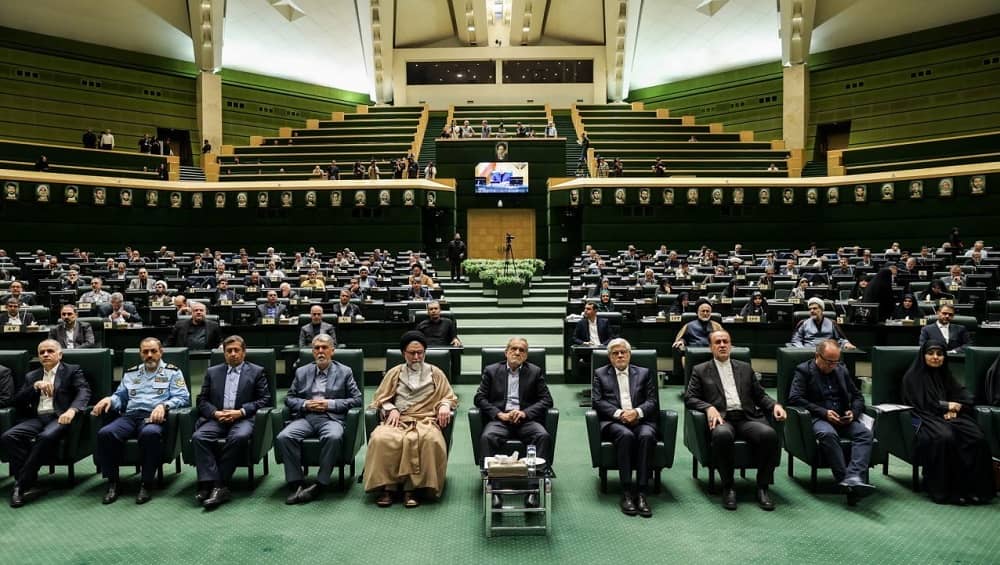
The vetting process, which focused on key ministries like Intelligence, Economy, and Foreign Affairs, has quickly revealed itself to be less about assessing the qualifications of the candidates and more about securing unwavering loyalty to Supreme Leader Ali Khamenei.
The proceedings have exposed deep factional rifts within the regime, with rival factions using the opportunity to attack each other while maintaining a façade of unity under Khamenei’s rule. This power struggle, however, remains tightly controlled, ensuring that any outcome will align with the Supreme Leader’s overarching agenda.
A Display of Arrogance and Loyalty
Esmail Khatib, the nominee for Minister of Intelligence, presented a defense of his tenure characterized by a mixture of arrogance and confidence in Khamenei’s backing. He highlighted his role in suppressing dissent, claiming a reduction in arrests and a more “compassionate” approach. However, this so-called compassion appears to be a thin veil for the regime’s continued oppression.
Reasons Behind #Khamenei’s Forced Approval of Masoud Pezeshkian in #Iran’s Sham Electionhttps://t.co/OC0zjoxuLn
— NCRI-FAC (@iran_policy) July 11, 2024
Khatib deflected criticism by emphasizing Tehran’s international intelligence collaborations with 53 countries, showcasing Iran’s strength in global intelligence. Despite concerns over his track record, especially regarding recent intelligence failures, Khatib’s position seems secure, largely due to his loyalty to Khamenei. As some MPs pointed out, loyalty to the Supreme Leader often trumps competence in security-related positions.
Foreign Affairs Nominee Stirs Controversy
Abbas Araghchi, the Minister of Foreign Affairs nominee, defended his foreign policy approach by pledging to strengthen ties with China and Russia while continuing support for regional militant groups. His critics in parliament were quick to condemn his involvement in past nuclear negotiations, with some viewing his appointment as a dangerous move that undermines Iran’s national dignity.
Despite the opposition, Araghchi’s commitment to the “Resistance Axis” in the Middle East garnered support from certain MPs, highlighting the regime’s focus on regional influence over diplomatic engagement with the West.
#Iranian Regime’s Parliament Clashes with Pezeshkian over Cabinet Pickshttps://t.co/WZEy7Tfm50
— NCRI-FAC (@iran_policy) August 17, 2024
Economic Failures and Empty Promises
Abdolnaser Hemmati, the nominee for Minister of Economy, faced harsh criticism for his previous role as the head of Iran’s Central Bank. He acknowledged the dire economic situation but offered little in the way of concrete solutions, instead criticizing the regime’s economic policies, particularly its reliance on oil exports.
Hemmati’s critics did not hold back, accusing him of incompetence and highlighting his failure to address corruption and the economic collapse during his tenure. The exchange rate’s dramatic increase and skyrocketing inflation were cited as direct consequences of his leadership.
Internal Rifts Deepen in Iran as #Pezeshkian’s Cabinet Faces Backlash from All Sideshttps://t.co/E8yVtdIS9U
— NCRI-FAC (@iran_policy) August 16, 2024
Loyalty Above All
As the vetting process continues, it is evident that loyalty to Khamenei is the primary criterion for any nominee. The regime’s internal power struggles, exposed during these sessions, reveal a government more concerned with maintaining control than addressing the pressing issues facing the country. The ongoing cabinet vetting underscores the deep divisions within the Iranian leadership, with loyalty to the Supreme Leader remaining the ultimate deciding factor in these appointments.

MEK Iran (follow us on Twitter and Facebook), Maryam Rajavi’s on her site, Twitter & Facebook, NCRI (Twitter & Facebook), and People’s Mojahedin Organization of Iran – MEK IRAN – YouTu