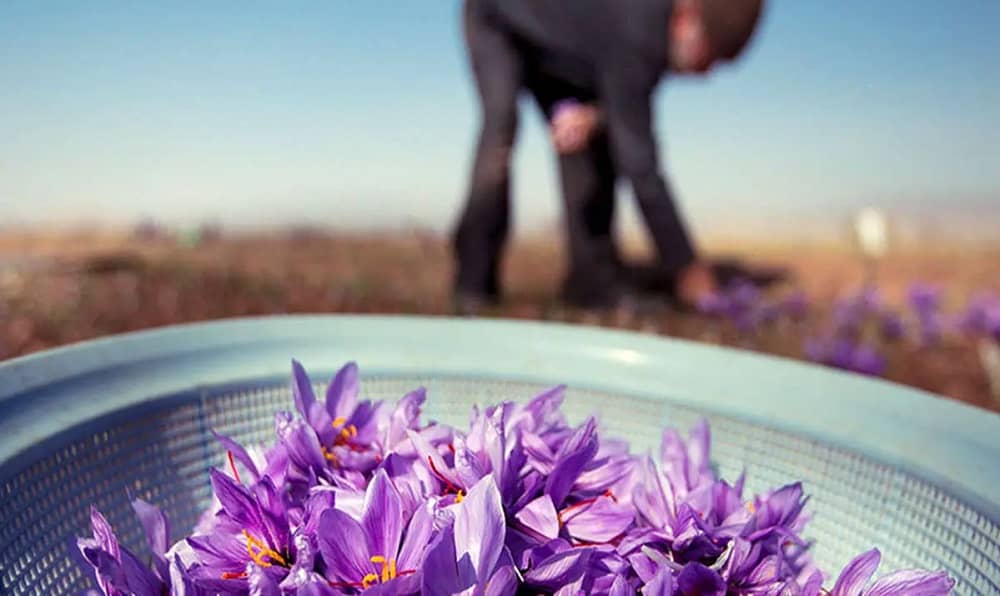
A combination of international sanctions, domestic economic mismanagement, and foreign competition has placed this vital sector under significant strain. Iranian officials are raising alarms as foreign competitors increasingly repackage Iranian saffron and market it under their own brands, threatening the future of one of Iran’s key export commodities.
According to Mohammad-Hassan Didehvar, a member of the Iran-Spain Joint Chamber of Commerce, Spain, a major player in the global saffron market, is heavily reliant on Iranian imports. Didehvar revealed that Spanish companies purchase Iranian saffron in bulk, repackage it, and sell it as a Spanish product. Despite Spain’s own saffron cultivation efforts, it remains largely dependent on Iranian saffron for global distribution. “Iran has been the main supplier of saffron exported from Spain, which is then sold globally as a Spanish product,” Didehvar told ILNA News Agency on October 19, 2024.
#Iran News:
Iran’s #Saffron Industry is Facing Troubled Fate, Official Warnshttps://t.co/eJ9qxc2KTJ— NCRI-FAC (@iran_policy) April 10, 2024
This issue extends beyond Spain. Countries like Afghanistan and the UAE have also been reported to buy Iranian saffron, rebrand it, and distribute it internationally. As Didehvar highlighted, Afghan traders have an advantage due to better banking access in Spain, exacerbating Iran’s struggle to maintain its market share. International sanctions have crippled Iran’s ability to engage in direct trade, forcing traders to navigate complicated financial arrangements through intermediaries, adding costs and risks to their transactions.
Domestically, the impact is equally troubling. Farshid Manouchehri, Secretary of Iran’s National Saffron Council, expressed concerns about declining saffron consumption within Iran itself. With prices soaring to 70-80 million tomans per kilogram, many Iranians can no longer afford to purchase this once-common household item. Manouchehri emphasized that inflation and stagnant incomes have contributed to the drop in domestic sales. These struggles in the saffron industry reflect a larger pattern affecting traditional Iranian exports, including pistachios and carpets.
While the regime’s officials and pundits blame sanctions as the mere source of Iran’s economic problems, state media acknowledged in recent days that the state corruption, mismanagement, and ineptitude, have ruined Iran’s economy.#IranRevoIution https://t.co/yhEvVxnTeb
— NCRI-FAC (@iran_policy) May 1, 2023
Despite government pledges to boost non-oil exports, the Iranian regime has failed to establish effective branding or navigate sanctions effectively, leaving competitors to dominate the market. The industry’s decline underscores the broader economic crisis in Iran, fueled by the regime’s regional policies, corruption, and inability to adapt to global market changes. Iran’s saffron, once a symbol of national pride, now illustrates the regime’s failure to protect and promote its economic asset.