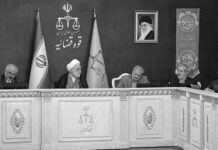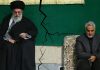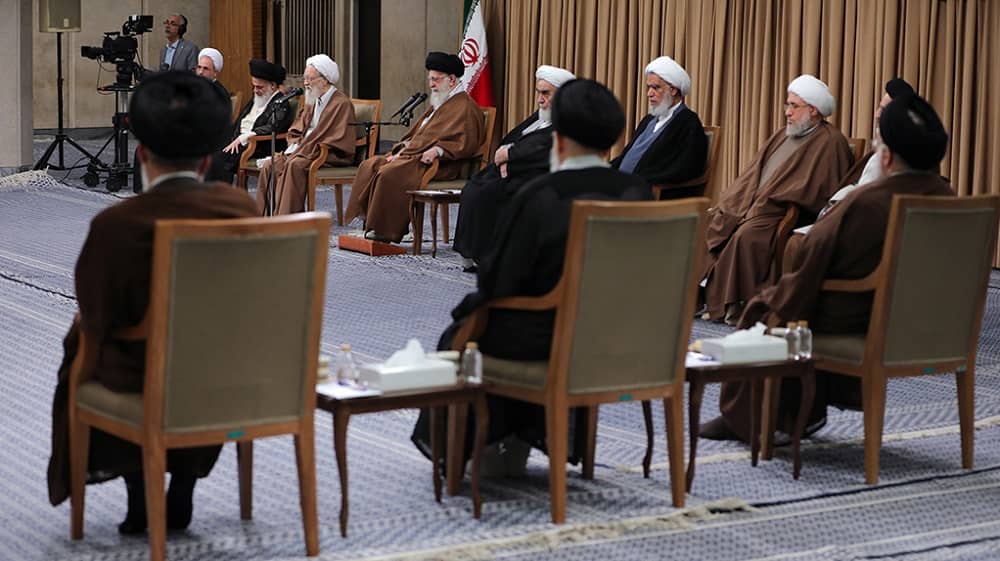
While the international community was tuned in for any reaction to the election results, Khamenei directed his focus to domestic stability and reinforced his stance on Iran’s regional influence. Meeting with the Assembly of Experts—a powerful body tasked with selecting the next Supreme Leader—Khamenei highlighted the importance of maintaining the ideological purity of the Islamic Republic.
\“The Assembly of Experts, as defined in our Constitution, is one of the most revolutionary institutions of the Islamic Republic,” he remarked, underscoring the weight of their responsibility in appointing his successor. The Supreme Leader urged the Assembly to avoid “regression” and to remain vigilant against ideological shifts, reiterating that any deviation from the revolutionary path would be unacceptable.
#Khamenei’s Post-Strike Address Exposes Fears of Regional Setbacks and Regime Insecurityhttps://t.co/CNStufiQYC
— NCRI-FAC (@iran_policy) October 28, 2024
Khamenei further detailed the qualifications he deems essential for his successor, emphasizing the need for an individual committed to Iran’s revolutionary values. “One of the most essential conditions is an unwavering commitment to the revolution’s path and goals. This individual must be ready for constant, tireless work,” he declared, signaling his intention to ensure the continuity of his policies, particularly Iran’s role in the region.
Addressing concerns about Iran’s proxy groups, Khamenei dismissed claims of Hezbollah’s weakening in Lebanon. He defended the resilience of Iran’s ally, asserting, “Hezbollah remains strong, bolstered by its fighters, spiritual resolve, and unwavering morale.” His statement, while intended to reassure, reflects the pressures Iran faces as anti-Iranian sentiment rises across the Middle East, with local groups challenging Tehran’s influence.
Despite Khamenei’s outward confidence, signs of internal discord within Iran are increasingly evident. Widespread economic hardship, coupled with inflation and political repression, has stirred public discontent. In a rare critique, prominent cleric Hossein Rahimian Moaddab criticized the regime’s direction, observing that youth disillusionment is growing. “A lack of identity, concern over the future, and anxiety over job prospects are particularly pronounced among our youth,” he noted.
Internal Power Struggle in #Iran Reveals Cracks in Khamenei’s Regional Strategyhttps://t.co/DSf08rQiHD
— NCRI-FAC (@iran_policy) October 27, 2024
As Khamenei remains steadfast in his approach, balancing internal stability with his unyielding stance on regional influence, Iran faces mounting challenges. His silence on the U.S. election only reinforces his focus on securing the continuity of Iran’s ideological path, even as calls for change resonate across the nation.

MEK Iran (follow us on Twitter and Facebook), Maryam Rajavi’s on her site, Twitter & Facebook, NCRI (Twitter & Facebook), and People’s Mojahedin Organization of Iran – MEK IRAN – YouTu