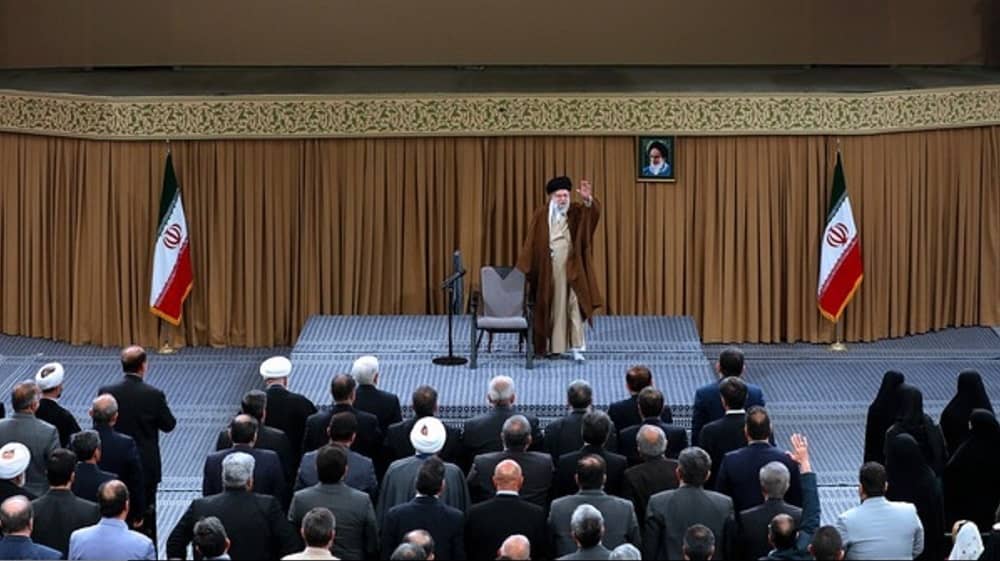
On January 22, Iranian Supreme Leader Ali Khamenei addressed a gathering labeled as “private sector activists” by state media, in what appeared to be an effort to rally his regime’s flagging morale. The speech reflected ongoing challenges, including economic turmoil, regional setbacks, and concerns about potential domestic unrest, which have left the regime increasingly fragile.
Khamenei’s speech underscored the regime’s reliance on propaganda and narrative control to counter growing dissatisfaction among Iranians. He emphasized the importance of using state media and intelligence to combat what he called an “atmosphere of despair” being spread by “enemies.” He asked whether Iran’s youth and students were aware of the country’s purported progress, framing his remarks as a call for unity. By presenting his loyalists as representatives of the broader public, Khamenei sought to project an image of widespread support.
Addressing the prospect of international sanctions, Khamenei pointed to Iran’s involvement in BRICS—a coalition of emerging economies including Brazil, Russia, India, China, and South Africa—as a means to reduce dependency on the U.S. dollar. He claimed that BRICS’ financial mechanisms could help Iran bypass sanctions, although he acknowledged hesitations among some members due to political concerns. His statements, however, overlook the limited progress of these efforts, as major BRICS members like China and India remain cautious about risking their economic ties with the West.
#Khamenei’s Speech Reflects Iranian Regime’s Morale Crisis After Strategic Loss in #Syriahttps://t.co/9EwLTl0Ydv
— NCRI-FAC (@iran_policy) January 1, 2025
Despite acknowledging regional challenges, Khamenei dismissed claims of waning Iranian influence, citing events in Gaza as evidence of resilience. He derided critics as “delusional” and insisted that Iran’s “resistance” would endure. Yet his assertions contrast sharply with Iran’s struggles: deepening poverty, a collapsing currency, and increasing regional setbacks, including losses faced by Tehran’s proxies, whose leaders and infrastructure have been targeted.
Khamenei’s rhetoric, which included calls for reducing reliance on the dollar, has been a recurring theme for over two decades but has yielded little tangible success. His recent remarks reflect a regime trying to mask its vulnerabilities with bold proclamations. The growing disconnect between Khamenei’s optimistic narrative and Iran’s economic and geopolitical realities highlights the regime’s precarious position. As internal and external pressures mount, the regime’s ability to sustain its authority is increasingly in question.

MEK Iran (follow us on Twitter and Facebook), Maryam Rajavi’s on her site, Twitter & Facebook, NCRI (Twitter & Facebook), and People’s Mojahedin Organization of Iran – MEK IRAN – YouTu