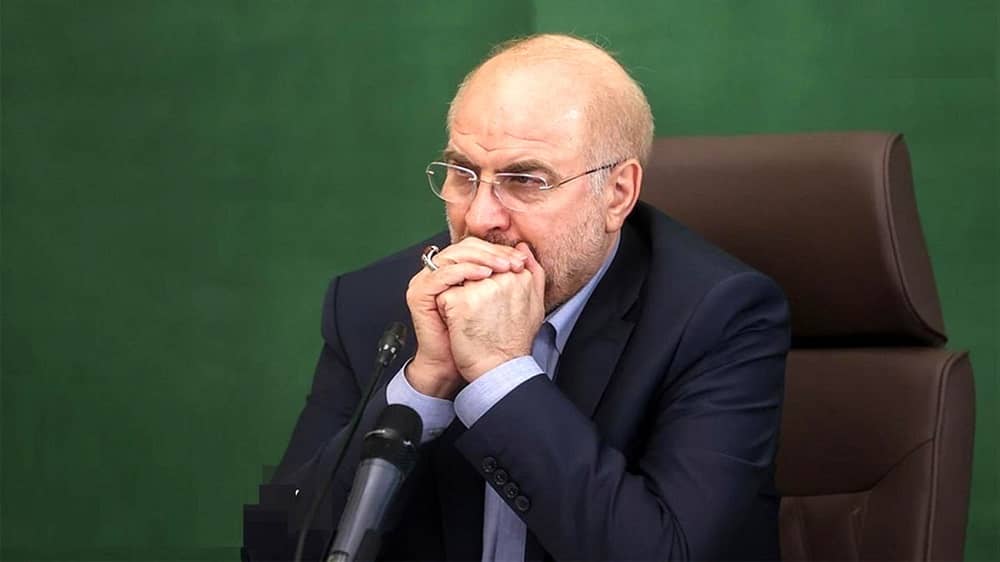
This reappointment ensures his position as the head of the legislative body for another year until the next internal elections, despite his embroilment in numerous corruption scandals and factional disputes.
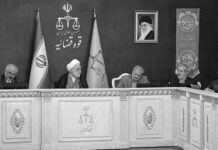
The parliamentary session began with a message from Supreme Leader Ali Khamenei, read by his representative Mohammad Mohammadi Golpayegani. Khamenei’s message urged the representatives to foster a “calming and hopeful” atmosphere while avoiding “useless media competitions and harmful political disputes.” This directive underscored the regime’s intolerance for instability amidst significant internal and external crises.
Apart from Ghalibaf, Mojtaba Zolnour and Manouchehr Mottaki were candidates for the Speakership. Zolnour, closely associated with the Revolutionary Guards and a known opponent of the 2015 Iran nuclear deal, received 60 votes, while Mottaki, a former foreign minister under Mahmoud Ahmadinejad, garnered only 5 votes. Despite these candidates’ efforts, Ghalibaf’s re-election was anticipated, reflecting the regime’s preference for stability over political rivalry.
Analyzing Ghalibaf’s Standoff for #Iran’s Parliament Speakershiphttps://t.co/oZTs408rGr
— NCRI-FAC (@iran_policy) March 12, 2024
Notably, Mousa Ghazanfarabadi, Mahmoud Nabavian, and Hamid Rasaei, who had also competed against Ghalibaf, were persuaded to withdraw their candidacies. However, 24 blank votes in the newly purged Parliament highlight underlying factional conflicts, casting doubt on Khamenei’s hope to suppress future power struggles.
Following Ghalibaf’s reappointment, the Parliament conducted further elections for Deputy Speakers. Hamidreza Haji Babaei and Ali Nikzad were elected as the first and second Deputy Speakers, respectively. Haji Babaei, known for his tenure as Minister of Education under Ahmadinejad, and Nikzad, a former Minister of Housing, hold significant influence within the regime.
Ghalibaf’s career has been marked by a series of high-profile corruption scandals. As Tehran’s Mayor and a former commander in the Islamic Revolutionary Guard Corps (IRGC), his name has been linked to various financial misconducts, including the astronomical real estate scandal and a 65 million toman bribery case. His tenure has been further tainted by allegations from the Iranian dissident group “Ghiam Sarnegouni,” which leaked documents implicating him in facilitating budgetary approvals for Khamenei’s office and the IRGC.
Despite these controversies, Ghalibaf’s political career remains resilient, largely due to his close ties with Khamenei and the Guardian Council’s approval. His re-election as Speaker amid these ongoing issues signifies the regime’s prioritization of continuity over addressing internal corruption and dissent.
As Ghalibaf continues in his role, the Iranian regime faces mounting internal dissent and external pressures. While state officials are engrossed in legislative and executive power games, vying for more influence and wealth, the Iranian populace continues to strive for fundamental change, highlighting the fragile state of the regime’s hold on power.

MEK Iran (follow us on Twitter and Facebook), Maryam Rajavi’s on her site, Twitter & Facebook, NCRI (Twitter & Facebook), and People’s Mojahedin Organization of Iran – MEK IRAN – YouTu