Media outlets, lawmakers, and former officials are openly criticizing Supreme Leader Ali Khamenei’s costly regional ambitions, urging a shift in focus to address the regime’s mounting internal and external challenges.
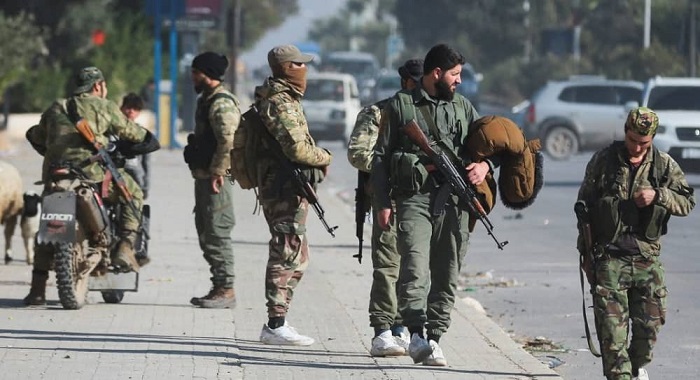
On December 7, the state-aligned Etemad newspaper characterized the developments in Syria as deeply alarming. “The opponents of Assad’s government, taking advantage of the preoccupation of Iran, Syria, Russia, and Hezbollah with various crises, have intensified their attacks,” the publication noted. It warned of broader implications for the Middle East, stating, “Internal tensions and conflicts are the perfect opportunity to weaken and defeat Iran.
Divisiveness, which has plagued the Islamic Republic for decades, has grown like cancer within the system over the past twenty years.” Setareh Sobh echoed these concerns, describing Iran’s financial investments in Syria as a “strategic miscalculation.” The publication pointed to Assad’s fractured authority despite external support, highlighting the heavy toll on Iran’s resources. “Syria, for Iran, has been a vital logistical hub for support to Lebanon, but the cost has been staggering,” it stated.
#Iran News: Officials and Analysts Reveal Regime’s Deep Anxiety Over Developments in #Syria and Lebanonhttps://t.co/JttsD0V3Pr
— NCRI-FAC (@iran_policy) November 30, 2024
Former National Security Commission head Heshmatollah Falahatpisheh underscored the economic losses incurred by Iran during its involvement in Syria. He detailed unfulfilled promises of land, mining rights, and oil deals, noting, “The state has yet to recover the expenses incurred during the 2010s. Even in phosphate exports, the Russians took over, leaving nothing for Iran.”
Criticism has extended to Khamenei’s broader regional strategy. Setareh Sobh bluntly urged Khamenei to “leave Arab affairs to the Arabs,” while Ahmad Naderi, a member of parliament, warned, “If Damascus falls, we will lose Lebanon and Iraq, and the enemy will be at our borders.”
Even publications linked to key regime insiders have issued implicit critiques. Farhikhtegan, associated with Ali Akbar Velayati, a top Khamenei advisor, cautioned, “West Asia is undergoing dangerous transitions. Any political entity that fails to understand this reality will suffer.” The publication called for a reassessment of Iran’s foreign policy to avoid catastrophic outcomes.
Larijani’s Trip Signals #Iran Regime’s Desperation to Maintain Control in #Lebanon and Syriahttps://t.co/A9pti7HAN8
— NCRI-FAC (@iran_policy) November 21, 2024
This growing chorus of dissent reflects not only dissatisfaction with the current strategy but also a deeper crisis within the regime. Khamenei’s insistence on regional influence as a cornerstone of the regime’s survival may now be undermining the very stability it seeks to protect. With internal pressures mounting and regional challenges intensifying, Tehran’s path forward appears increasingly fraught with peril.