These demonstrations underscored the nation’s escalating economic and social crises, as the government’s failure to address grievances led to increased frustration and desperation. In Tehran, retirees from the Telecommunications Company of Iran gathered to demand pension reforms, protesting the government’s mismanagement of their funds.
Their chants, “Our tables are empty, enough with the promises!” echoed throughout the capital, as retirees in other cities like Shiraz, Kermanshah, and Rasht joined the protests. Despite long-standing promises, the government’s inaction has compounded frustrations, highlighting the growing distrust in the regime’s ability to resolve economic disparities.
October 7—Rasht, northern Iran
Retirees of Telecommunication Company of Iran resume weekly protest rallies, demanding higher pensions and other basic rights.
"The tyrannical shareholders have stolen our rights," protesters chant#IranProtestspic.twitter.com/Men7kkHoxw— People's Mojahedin Organization of Iran (PMOI/MEK) (@Mojahedineng) October 7, 2024
Meanwhile, workers at the Argavan Petrochemical Plant in Ilam continued their protests, demanding the release of colleagues detained during earlier demonstrations.
Facing long-term unemployment and uncertainty about their jobs, two workers attempted self-immolation in a shocking act of desperation, though they were stopped in time. The workers’ plight, including months without answers regarding their employment, is emblematic of the broader labor unrest affecting the country.
October 7—Bushehr, southern Iran
Employees of the Fajr Jam Gas Refining Company hold protest rally to reiterate their demands for better wages and working conditions. #IranProtestspic.twitter.com/n7ZhBJxtFH— People's Mojahedin Organization of Iran (PMOI/MEK) (@Mojahedineng) October 7, 2024
The unrest also spread to Bushehr Province, where employees of the South Pars Gas Company protested wage caps and job insecurity. The oil and gas industry, crucial to Iran’s economy, has been plagued by strikes for months, as workers demand fair compensation and better working conditions. In the Fajr Gas Refinery, similar protests reflect the deep-seated anger of laborers in this critical sector.
In the impoverished Sistan and Baluchestan Province, the regime’s crackdown took an even harsher turn. In Chabahar, the IRGC demolished homes belonging to Baluchi residents, leaving many homeless. The destruction of these homes is part of a larger strategy to seize land for IRGC-controlled businesses, intensifying the marginalization of the Baluchi minority.
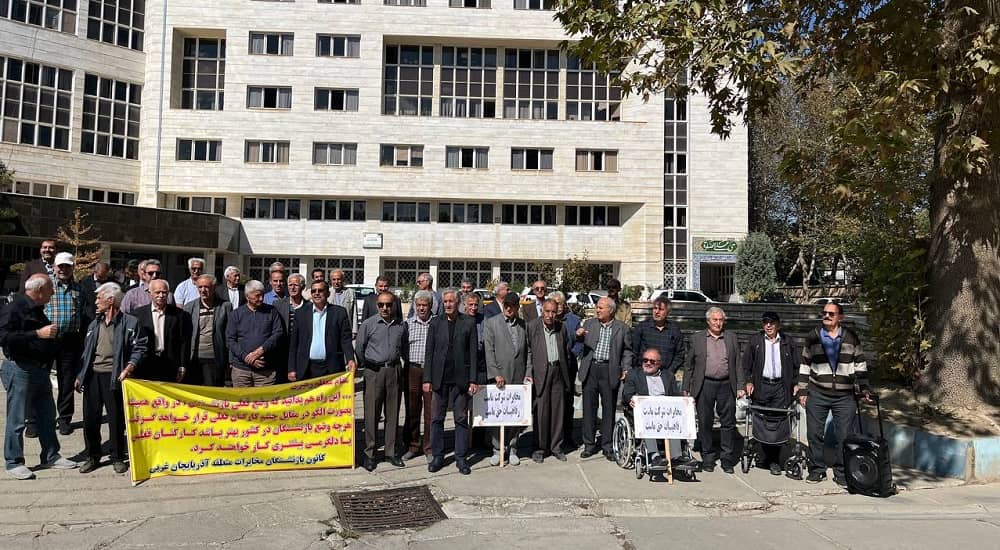
October 7—Ardebil, northwest Iran
Retirees of the Telecommunications Company of Iran (TCI) resume rallies to protest low pensions and lack of response by the government. #IranProtests pic.twitter.com/7gvMPkO8DA— People's Mojahedin Organization of Iran (PMOI/MEK) (@Mojahedineng) October 7, 2024
Adding to the national turmoil, housing protests emerged in Zanjan and Tehran, where citizens involved in long-delayed construction projects demanded the homes they had paid for years ago. As housing shortages worsen, many Iranians find themselves without shelter despite significant financial investments.
These events reflect a nation on the edge, where unresolved economic and social issues are driving the population to demand justice. However, the government’s violent responses only seem to fuel the unrest, as more Iranians join the calls for accountability and reform.

MEK Iran (follow us on Twitter and Facebook), Maryam Rajavi’s on her site, Twitter & Facebook, NCRI (Twitter & Facebook), and People’s Mojahedin Organization of Iran – MEK IRAN – YouTu