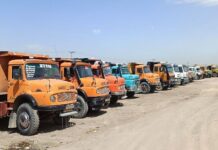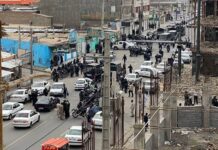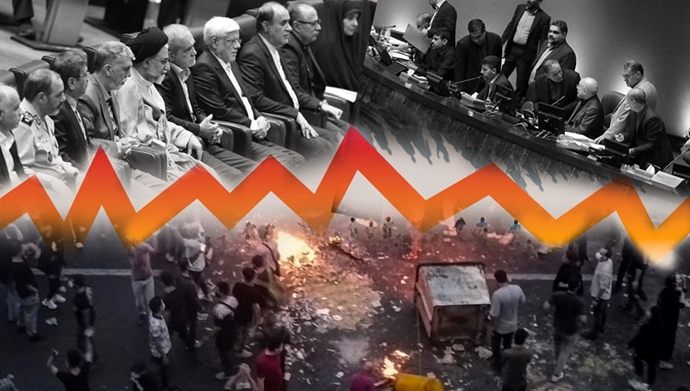
This comes when social, labor, and political protests are intensifying, sparking discussions of a unified movement against the regime. The question arises: Which polarization does Khamenei truly fear—the internal governmental divisions or the growing gap between Iranian society and the government?
As protests surge across Iran, it has become evident that the real division lies not just within the regime but between the clerical leadership and the broader society. Demonstrations initially focused on economic and labor grievances, have evolved to include more overt political dissent.
Protesters increasingly direct their anger at systemic corruption, accusing the regime of looting public wealth to sustain itself, while ignoring the people’s basic needs. These protests expose the regime’s vulnerable spot: its mismanagement of the economy and reliance on oppressive tactics to maintain power.
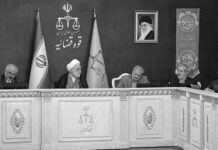
Internally, the regime itself is fracturing. After the death of former President Ebrahim Raisi, who was viewed as a close ally of Khamenei, the new president, Masoud Pezeshkian, has struggled to mend growing internal divides.
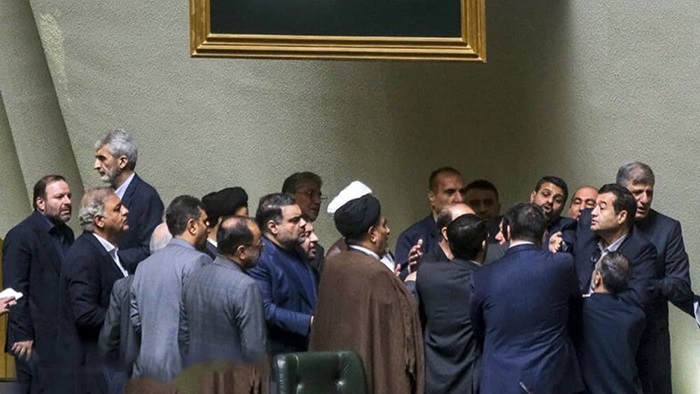
Factional infighting has escalated, with rival groups competing for power and resources. This internal strife reflects a broader crisis that Khamenei’s warnings have been unable to quell. The growing protests have highlighted this polarization. Social groups, labor unions, political prisoners, and anti-regime activists are increasingly aligned in their opposition to the clerical establishment.
Their demands for economic justice, political freedom, and human rights challenge the regime’s long-standing dominance. Meanwhile, the regime’s focus on maintaining its grip on power, through economic exploitation and foreign military ventures, has further alienated the Iranian population.
At the heart of this conflict is a fundamental clash between the people and the regime. For over two decades, the Iranian government has pursued a form of religious and political totalitarianism that has suppressed basic rights. Yet, ongoing uprisings—often led by disillusioned youth and the organized resistance movement—are shaking the regime to its core.
As polarization deepens, the decisive struggle in Iran is becoming increasingly clear: a battle between a regime desperately trying to preserve its authority and a population determined to reclaim its rights.