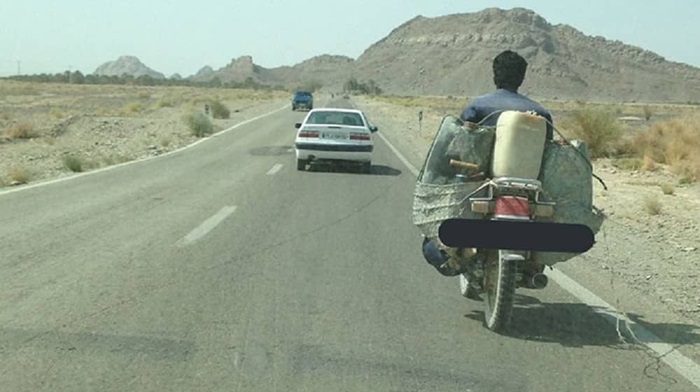
The recent tragedies involving fuel porters have shocked and saddened the people of Baluchestan, highlighting the harsh realities faced by those who have no other means to support their families.
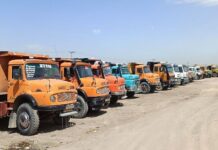
This week, the province was rocked by the tragic news of fuel porters burning to death—a heart-wrenching reminder of the daily dangers these individuals face. Fuel porters in this region either die in accidents or fall victim to the bullets of oppressive military forces. Their decision to engage in this hazardous work is not a choice but a desperate measure to provide for their families in a region where opportunities are scarce and resources are limited.
Rask—southeast #Iran
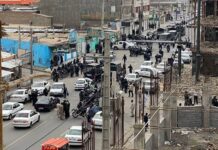
Locals protest after security forces open fire on an impoverished fuel porter.#IranProtestspic.twitter.com/DfzGCIwBeL— People's Mojahedin Organization of Iran (PMOI/MEK) (@Mojahedineng) November 1, 2023
The dire economic and social conditions in Sistan and Baluchestan force many into fuel portering, despite knowing the risks involved. For them, the necessity to earn a livelihood outweighs the fear of death, as they strive to keep their families alive in the face of overwhelming adversity. However, these tragedies are not isolated incidents; they are symptoms of a much deeper problem rooted in systemic oppression and neglect.
Improving the economic conditions, creating job opportunities, and addressing the basic needs of the people are the only ways to alleviate the suffering of those living in this region. Unfortunately, under the tyrannical regime of Khamenei, these solutions seem unattainable. There is hope, however, that this oppressive regime will one day be overthrown, and with it, the end of the sorrows that plague the people of Sistan and Baluchestan.
Today's clashes in #Saravan in #SistanBaluchestan province in #Iran erupted after the IRGC dug large ditches on the highway to prevent Baluch fuel porters from transporting fuel and started to shoot on the people: 40 innocent people so far killed & 100 injured #IranProtests pic.twitter.com/pvAXweVTQE
— Hossein Abedini (@HoAbedini) February 23, 2021
The past week saw multiple incidents resulting in the deaths of young fuel porters. On Saturday, August 3, a tragic accident occurred when military forces pursued a fuel porter’s vehicle, causing it to crash into a passenger car. This collision claimed the lives of two fuel porters and three family members traveling in the car, all of whom perished in the ensuing flames.
Just a day earlier, on Friday, August 2, a young Baluch fuel seller was shot and killed by unidentified gunmen at the Yakh-Sazi intersection in Chabahar. Residents attributed this killing to state forces, reflecting the widespread belief that the government is complicit in the violence against fuel porters.
Additionally, unknown individuals, suspected to be government agents, set fire to fuel depots used by Baluch residents to store fuel. These depots, essential for their livelihood, are often identified and destroyed by suppressive forces. On the evening of Friday, August 2, a fuel depot in Chah Jamal, Iranshahr, was set ablaze, causing irreparable damage.
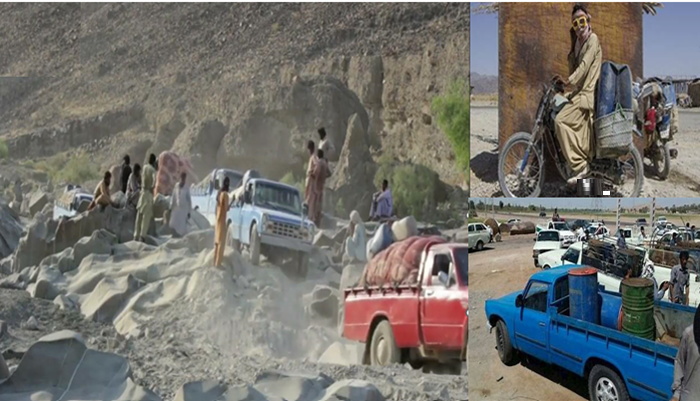
He and two other teenagers were targeted in the Kalagan border area of Saravan. Tragically, Imran did not survive his wounds after spending a week in the hospital.These incidents, marked by death, burning, and persecution, are a direct result of the regime’s systemic oppression. The people of Sistan and Baluchestan are forced to endure immense suffering in isolation, with little hope for change.
Even members of the regime’s parliament, like Rahmdel Bamari, have admitted to the dire conditions in the province, acknowledging the lack of necessities such as water and electricity, which only exacerbates the hardships faced by the residents.
Reports from state-run media, while attempting to shift blame, underscore the severity of the situation. The people of Sistan and Baluchestan continue to endure extreme heat, drought, and dust storms, making their lives even more unbearable. This relentless oppression has driven the people to the brink, with decades of inequality, discrimination, and exploitation fueling their radical revolts against the regime.
The tragic reality of fuel portering in Sistan and Baluchestan is a stark reminder of the broader struggles faced by the people in this region. Without meaningful change, the cycle of suffering and oppression is likely to continue, leaving the people of Sistan and Baluchestan with little hope for a better future.

MEK Iran (follow us on Twitter and Facebook), Maryam Rajavi’s on her site, Twitter & Facebook, NCRI (Twitter & Facebook), and People’s Mojahedin Organization of Iran – MEK IRAN – YouTu