These crimes notably include the extrajudicial killings of thousands of arbitrarily arrested prisoners during the 1980s crackdown on political dissent, with a significant focus on members of the People’s Mojahedin of Iran (PMOI/MEK).
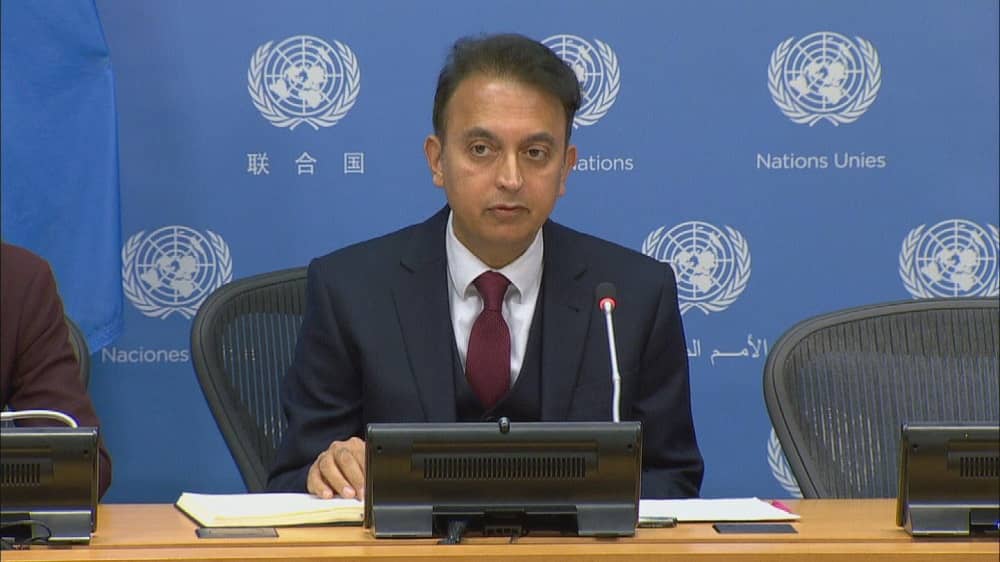
In the last days of his six-year mandate, Rehman detailed the widespread and systematic attacks against civilian populations by Iranian authorities between 1979 and 1988. He characterized these acts as crimes against humanity, listing offenses such as murder, extermination, enslavement, deportation, imprisonment, torture, rape, persecution, and enforced disappearances. Rehman stated, “The authorities in the Islamic Republic of Iran waged a widespread and systematic attack against a civilian population… to exterminate a large part of the political spectrum perceived as religious enemies of the theocratic rule.”
The report brings to light the extensive campaigns of mass murder, arbitrary detentions, torture, and other inhumane acts aimed at suppressing perceived enemies of the theocratic regime. This state policy targeted a broad range of citizens, including intellectuals, artists, socialists, and members of various political organizations, with PMOI members being significantly targeted during this period.
#Iran News in Brief
In a recent report published by the United Nations on March 1, @JavaidRehman @UN Special Rapporteur on the #HumanRights situation in Iran, expressed deep concerns regarding the escalating rate of executions in the country. Rehman highlighted that in the latest… pic.twitter.com/IncC8vcLfT— NCRI-FAC (@iran_policy) March 2, 2024
Rehman noted the systematic nature of these attacks, evidenced by consistent patterns of arbitrary detentions, enforced disappearances, torture, and extrajudicial executions documented across Iran. High-level executive and judicial authorities were implicated in orchestrating these campaigns against groups perceived as anti-Islam.
A key aspect of the report is the genocidal intent highlighted by Rehman, particularly towards the PMOI. He provided substantial evidence from statements and fatwas issued by senior Iranian officials, including Supreme Leader Ruhollah Khomeini, which demonstrated a clear intent to destroy these groups. These fatwas and official pronouncements categorized members and sympathizers of the PMOI as monafeqin (hypocrites) and murtad (apostates), justifying their extermination under religious pretexts.
“The specific requirements of the Genocide Convention and the challenges related to establishing genocide have already been considered. Khomeini’s fatwa… lays bare the genocidal intent in physically destroying the PMOI, which was treated as a religious group by the perpetrators,” stated Rehman.
Mostafa Pourmohammadi's staged interview reveals the regime's desperation to rewrite history on the #1988Massacre and counter MEK's influence on a restless society—an organization #Tehran has tried hard to eliminate and defame while claiming it has no significant following. pic.twitter.com/dbxo2jjZGa
— NCRI-FAC (@iran_policy) June 25, 2024
The 1988 massacre is highlighted as a particularly egregious instance of these atrocity crimes, involving the systematic execution of thousands of political prisoners, predominantly PMOI members and sympathizers. These executions, carried out following a fatwa by Ruhollah Khomeini, resulted in the extrajudicial killing and enforced disappearance of thousands, with victims buried in unmarked mass graves. Families have been denied information about their loved ones’ fates, constituting ongoing enforced disappearances.
Rehman stressed the urgent need for an international investigative and accountability mechanism to address these crimes. “The continued concealment of the fate of thousands of political opponents and the whereabouts of their remains amounts to the crime against humanity of enforced disappearance,” he stated.
Despite the Iranian regime’s denial of these atrocity crimes and the lack of justice for the perpetrators, Rehman emphasized the necessity of ensuring no impunity for such gross human rights violations, regardless of their timing. He called for an independent international investigative and accountability mechanism to advance truth, justice, and accountability for the victims.