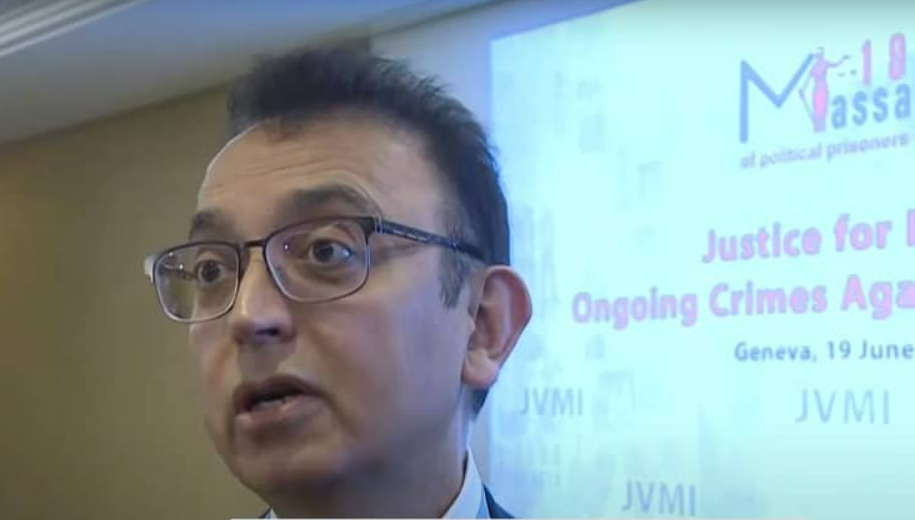
Rehman underscored the severity of these atrocities, calling for an international investigative mechanism to address the widespread abuses.”Between July and September 1988, thousands of political prisoners were murdered and exterminated. These were summary, arbitrary, and extrajudicial killings in prisons across Iran,” Rehman stated.
He further explained the ongoing nature of these violations, including enforced disappearances, leaving families in perpetual uncertainty about their loved ones’ fates. “Thousands of people and their families are still unaware of what happened to their loved ones,” he noted.
Rehman’s call to action extended to the international community, urging UN member states, civil society, and other stakeholders to take notice and work towards accountability. He classified these serious crimes as both crimes against humanity and genocide, emphasizing the necessity of punishing the perpetrators in courts of law. “Justice must take its course, and there must be accountability to end the impunity for these individuals,” he asserted.
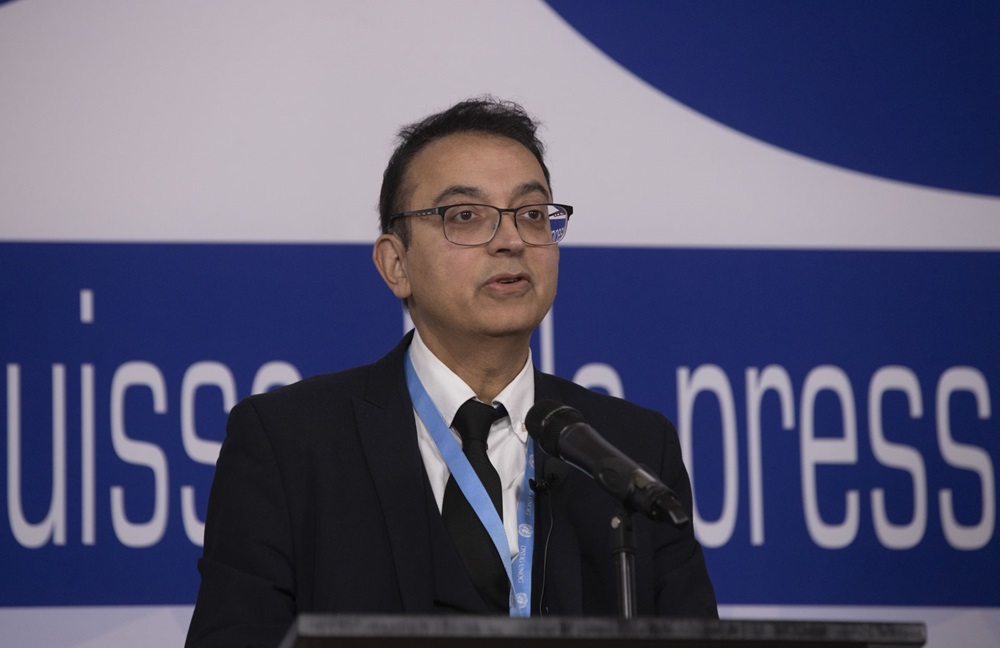
Rehman detailed how mass killings were conducted clandestinely, with victims buried in mass graves, which the regime has attempted to destroy to erase evidence. “The regime has failed to come up with any explanations. Over time, we have become aware of the gravity of the situation, particularly through the discovery of mass graves,” Rehman explained.
The ongoing issue of enforced disappearances remains a significant concern, as families continue to suffer without answers. Rehman called for the international community to focus on addressing these violations, particularly the atrocities from the 1980s. He expressed his hope that the UN Human Rights Council would establish a mechanism to preserve all available evidence for future legal proceedings.
Rehman acknowledged his role is not that of a judicial authority but stressed the importance of a judicial mechanism to comprehensively examine these crimes. He also highlighted the potential of pursuing justice through international tribunals, citing the case of Hamid Noury, who was convicted in a Swedish court for his involvement in the 1988 massacre.
“Universal jurisdiction remains a very important way for holding individuals accountable, especially in a country where the rule of law and fair trials cannot be conducted. We must continue to pursue this avenue,” he concluded. Rehman’s statements serve as a clarion call for the global community to take concrete steps toward addressing the grave human rights violations in Iran and ensuring that justice is served for the countless victims and their families.