In Iran, however, such revelations have regrettably become routine, barely causing a ripple in the tumultuous sea of public opinion. Four years into Supreme Leader Ali Khamenei’s power consolidation efforts, the very faction that once championed justice and anti-corruption now finds itself deeply mired in scandal.
The latest scandal involves Ali-Akbar Raefipour, a prominent figure within Khamenei’s circle, who is set to assume a key role in the regime’s new parliament. According to the state-run Entekhab website, over 100 billion tomans have been illicitly transferred within the Raefipour Foundation. This revelation followed Raefipour’s attacks on Parliament Speaker Mohammad-Bagher Qalibaf, which prompted Qalibaf’s allies to expose the fraud.
Further details emerged from Bahar News, linked to former president Mahmoud Ahmadinejad. The site reported that the Masaf Foundation, under Raefipour’s leadership, engaged in questionable financial transactions totaling approximately 100 billion tomans from multiple bank accounts, ostensibly for charitable activities. Jalil Mohebbi, a former official, argued that Raefipour’s actions could warrant up to five years of imprisonment for money laundering.
#Iran’s Second Sham #Elections: Officials Clash for Power Amidst Public Push for Changehttps://t.co/AijLQT8qvj
— NCRI-FAC (@iran_policy) May 11, 2024
Etemad, another state-run newspaper, highlighted the misuse of funds by the Masaf Foundation, which is legally bound to promote Mahdism. Any deviation, such as funding political campaigns, could result in severe penalties under Iran’s Islamic Penal Code. The paper also revealed documents showing payments to social media influencers and a foreign individual, Alona Vashchenko, further complicating the scandal.
These exposés have illuminated a deep rift within the Principlist factions, underscoring the enduring ideological conflicts that plague Iran’s political landscape. The infighting is not just between individuals but reflects broader, systemic issues that impede progress and stability in the country.
Iranians, both domestically and abroad, have expressed their outrage on social media, condemning the rampant corruption and foreseeing repercussions for the ruling elite. Recent weeks have seen numerous reports of theft and embezzlement involving senior officials, including the Supreme Leader’s representative, Tehran’s mayor, and various other high-ranking figures.
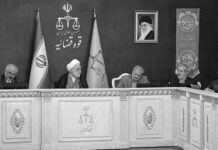
Amidst this corruption saga, Gholamhossein Mohseni Ejei, head of the judiciary, has attempted to project an image of justice by announcing a three-year prison sentence for Javad Sadatinejad, the former Minister of Agriculture Jihad, in a livestock fund case. However, these isolated sentences seem insufficient to quell public discontent.
Analyzing Ghalibaf’s Standoff for #Iran’s Parliament Speakershiphttps://t.co/oZTs408rGr
— NCRI-FAC (@iran_policy) March 12, 2024
The constant surfacing of corruption cases, including multi-billion-dollar contracts, embezzlement by high-ranking officials, and fraudulent activities across various sectors, highlights a pervasive problem. As Iran’s populace continues to suffer from economic hardships, their awareness and resentment towards these injustices grow.
In conclusion, the ongoing revelations of corruption within Iran’s political elite not only expose the deep-seated issues within the ruling establishment but also reflect the growing disillusionment of the Iranian people. The call for accountability and transparency has never been more urgent, as the nation grapples with its future amidst these profound challenges.

MEK Iran (follow us on Twitter and Facebook), Maryam Rajavi’s on her site, Twitter & Facebook, NCRI (Twitter & Facebook), and People’s Mojahedin Organization of Iran – MEK IRAN – YouTu