Home Blog Page 23

Pezeshkian’s Inauguration Marks Continuity and Conflict in Iran’s Political Landscape

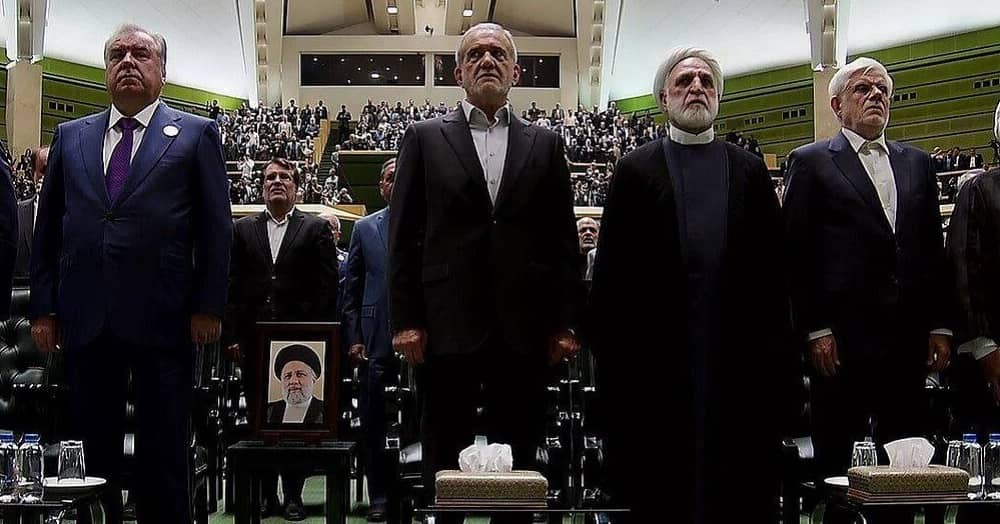
On Tuesday, July 30, the inauguration ceremony of Masoud Pezeshkian as the new president of Iran took place in the Parliament, attended by state officials and leaders of regional proxy forces.

On Tuesday, July 30, the inauguration ceremony of Masoud Pezeshkian as the new president of Iran took place in the Parliament, attended by state officials and leaders of regional proxy forces.


This event marks a significant political transition following the sudden and tragic death of former President Ebrahim Raisi. During the ceremony, Parliament Speaker Mohammad Bagher Ghalibaf commended Supreme Leader Ali Khamenei’s crisis management skills.
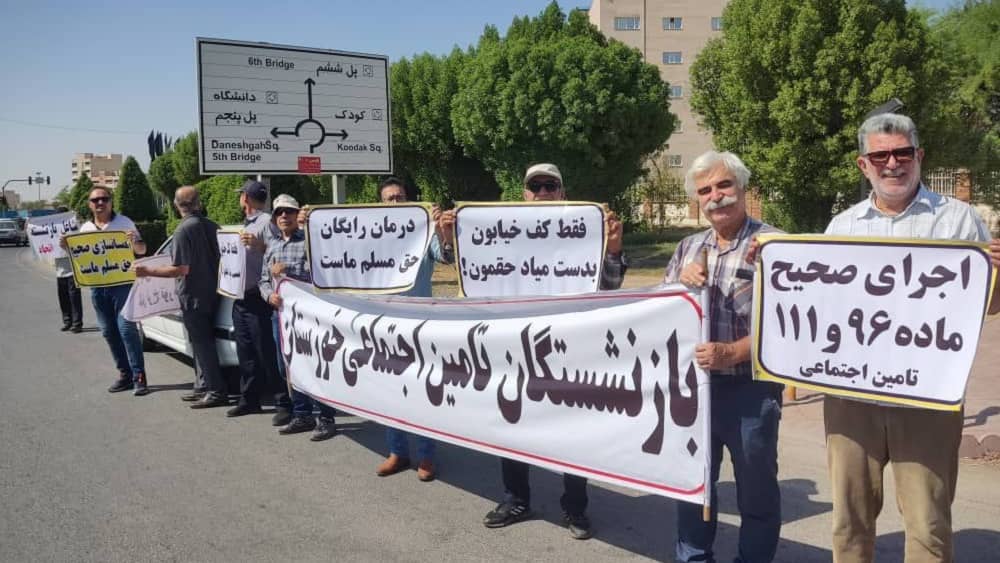
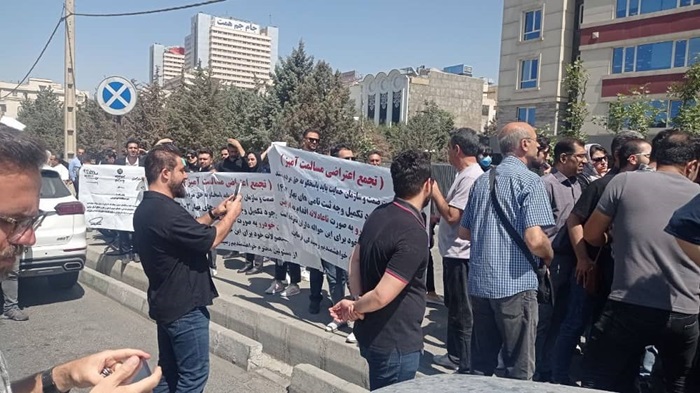
Iran Witnesses Widespread Protests Over Economic and Social Issues on August 4, 2024

Retirees from the education sector and the Social Security Organization held a protest rally in Tehran, reiterating their demands for higher pensions and fulfilling basic needs.

Retirees from the education sector and the Social Security Organization held a protest rally in Tehran, reiterating their demands for higher pensions and fulfilling basic needs.


This rally reflects a broader wave of discontent spreading across the country. In Kermanshah, western Iran, retirees from various sectors also gathered to demand better pensions and necessities. The protest in Kermanshah echoes similar sentiments expressed by retirees in Ahvaz, southwest Iran, who took to the streets with the same demands.

Protests Escalate Amidst Economic Hardship and Government Repression

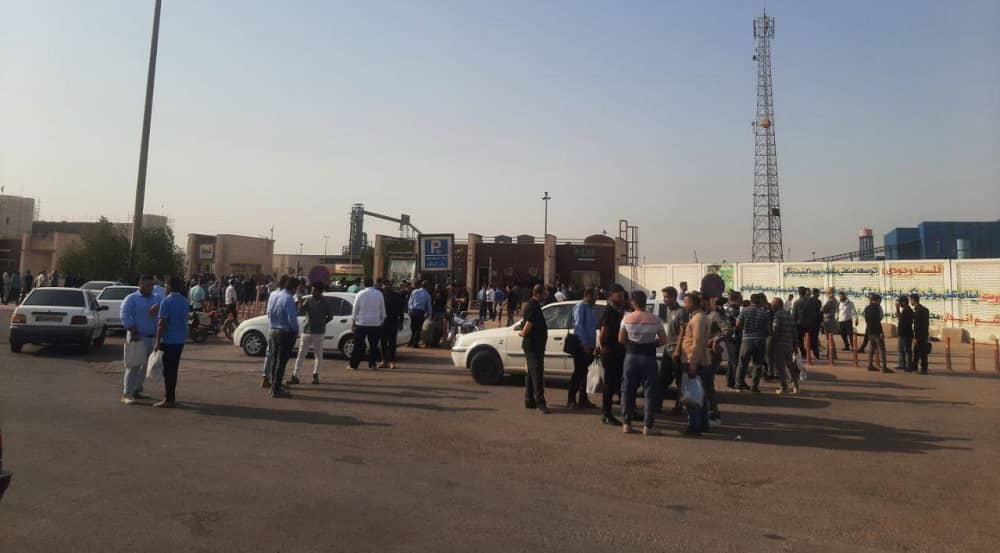
In recent days, Iran has witnessed a surge of protests across various cities, driven by widespread economic grievances, environmental concerns, and demands for transparency and justice.

In recent days, Iran has witnessed a surge of protests across various cities, driven by widespread economic grievances, environmental concerns, and demands for transparency and justice.


Workers, farmers, merchants, and other citizens have taken to the streets to voice their discontent, facing harsh responses from security forces. This wave of unrest reflects deep-seated frustration with the regime’s policies and practices, as the masses unite in its call for substantial change.

Campaign Against Executions in Iran Gains Momentum in Its 27th Week

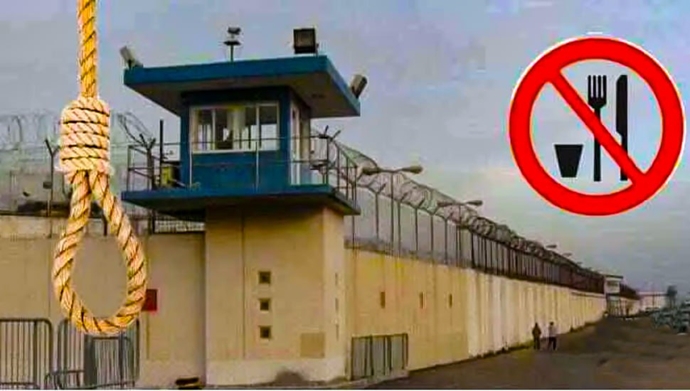
In a bold act of defiance against the increasing executions in Iran, political prisoners across 17 prisons have initiated the “No to Execution Tuesdays” campaign, now in its 27th week.

In a bold act of defiance against the increasing executions in Iran, political prisoners across 17 prisons have initiated the “No to Execution Tuesdays” campaign, now in its 27th week.


This grassroots movement, which started in a few prisons, has now expanded to include major cities such as Tehran, Karaj, Mashhad, and Tabriz, as well as smaller towns like Khoy, Naqadeh, and Saqqez.

PMOI Resistance Units commemorate the martyrs of the July 2009 attack against Camp Ashraf

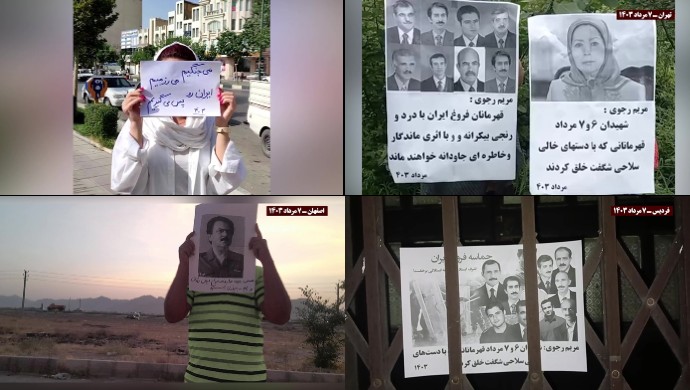
Activities of PMOI Resistance Units in commemorateion of the martyrs of the July 2009 attack on Camp Ashraf

Activities of PMOI Resistance Units in commemorateion of the martyrs of the July 2009 attack on Camp Ashraf


On July 28 and 29, 2009, Iraqi security forces attacked Camp Ashraf at the behest of the Iranian regime. The attackers used armored vehicles, batons, and firearms to injure hundreds of Ashraf residents and kill 13 PMOI members. Another 36 residents were taken hostage by security forces. Unarmed and defenseless, PMOI members in Ashraf set an example of resistance and resilience under pressure.

Iran Faces Rising Protests Amid Severe Water Shortages and Brutal Repression

On July 30, in the central Iranian city of Isfahan, farmers gathered at Khorasgan Square to protest against severe water shortages and the government’s failure to address their demands.

On July 30, in the central Iranian city of Isfahan, farmers gathered at Khorasgan Square to protest against severe water shortages and the government’s failure to address their demands.


These farmers, whose livelihoods depend on adequate water for agriculture, have increasingly voiced their frustration over the mismanagement and scarcity of water resources in the region.

Ahead of Inauguration, Regime President Pezeshkian Reaffirms Support for Foreign Mercenaries

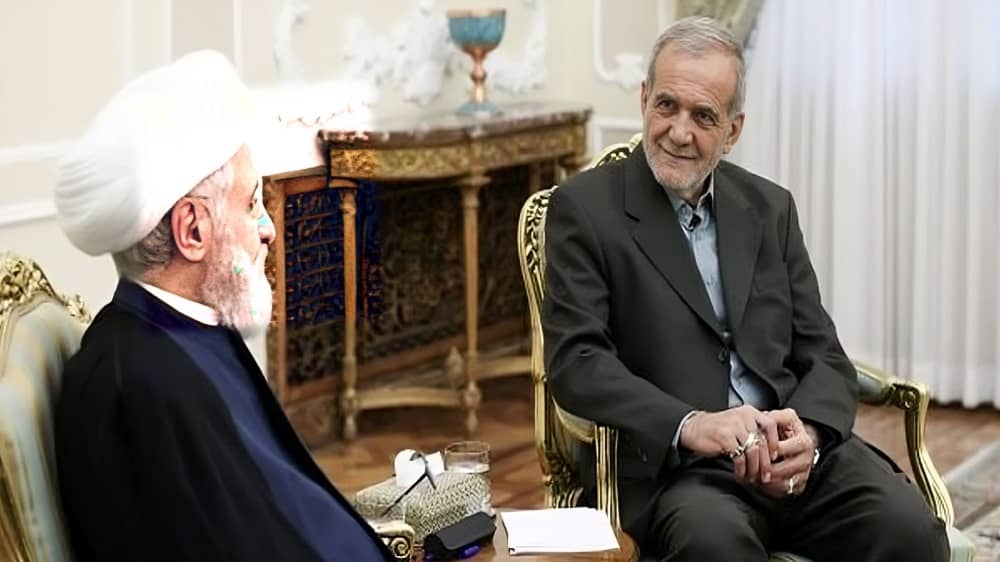
As Iran's newly appointed president, Masoud Pezeshkian, prepares for his inauguration, he has made it clear that Tehran will continue its longstanding policy of supporting regional proxy groups.

As Iran's newly appointed president, Masoud Pezeshkian, prepares for his inauguration, he has made it clear that Tehran will continue its longstanding policy of supporting regional proxy groups.


In a series of strategic meetings held on July 29 and 30, Pezeshkian emphasized the regime’s commitment to these alliances, reinforcing Iran’s intent to maintain influence in regional conflicts.

UN Special Rapporteur Calls for Accountability Over Iran’s 1980s Atrocities

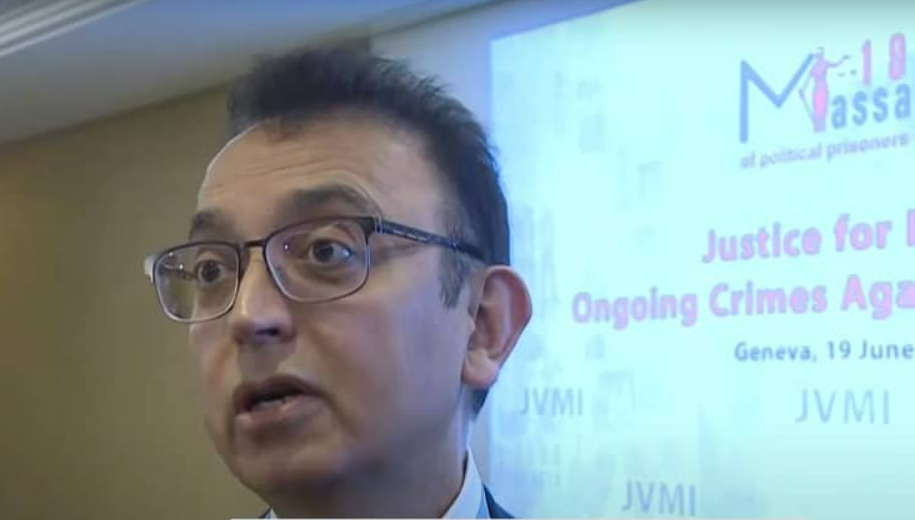
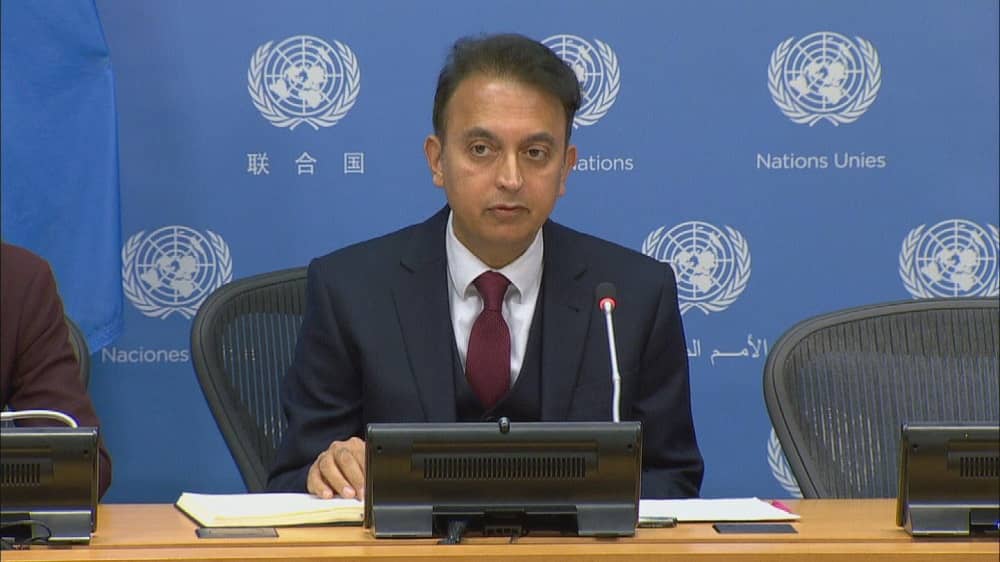
In a compelling interview with Simay Azadi TV, Javaid Rehman, the United Nations Special Rapporteur on the situation of human rights in Iran, highlighted the urgent need for justice regarding the crimes against humanity and genocide committed in Iran during the 1980s.

In a compelling interview with Simay Azadi TV, Javaid Rehman, the United Nations Special Rapporteur on the situation of human rights in Iran, highlighted the urgent need for justice regarding the crimes against humanity and genocide committed in Iran during the 1980s.


Rehman underscored the severity of these atrocities, calling for an international investigative mechanism to address the widespread abuses.”Between July and September 1988, thousands of political prisoners were murdered and exterminated. These were summary, arbitrary, and extrajudicial killings in prisons across Iran,” Rehman stated.

UN Calls for Accountability over Iran’s Atrocity Crimes

Javaid Rehman, the UN Special Rapporteur on human rights in Iran, has released a final, comprehensive report urging an international mechanism to investigate and prosecute those responsible for the "atrocity crimes" committed in Iran.

Javaid Rehman, the UN Special Rapporteur on human rights in Iran, has released a final, comprehensive report urging an international mechanism to investigate and prosecute those responsible for the "atrocity crimes" committed in Iran.


These crimes notably include the extrajudicial killings of thousands of arbitrarily arrested prisoners during the 1980s crackdown on political dissent, with a significant focus on members of the People’s Mojahedin of Iran (PMOI/MEK).

New President of Iran’s Regime Inaugurated Amid Strict Directives

On July 28, Masoud Pezeshkian was quietly appointed as the new president of Iran’s regime.

On July 28, Masoud Pezeshkian was quietly appointed as the new president of Iran’s regime.


The ceremony, marked by its cold and silent atmosphere, saw Iran’s Supreme Leader, Ali Khamenei, endorsing Pezeshkian under the condition of being “fit for duty.” In his decree, Khamenei described Pezeshkian as “wise, honest, popular, and learned” but emphasized that his confirmation would persist only if Pezeshkian’s path aligned with “the true course of Islam and the revolution.” This caveat underscored the conditional nature of Khamenei’s approval.