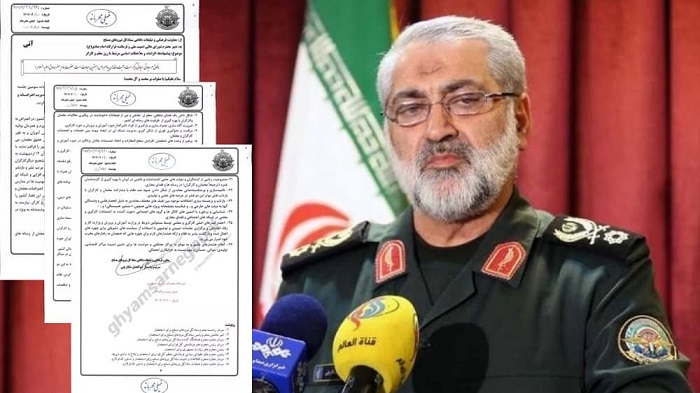
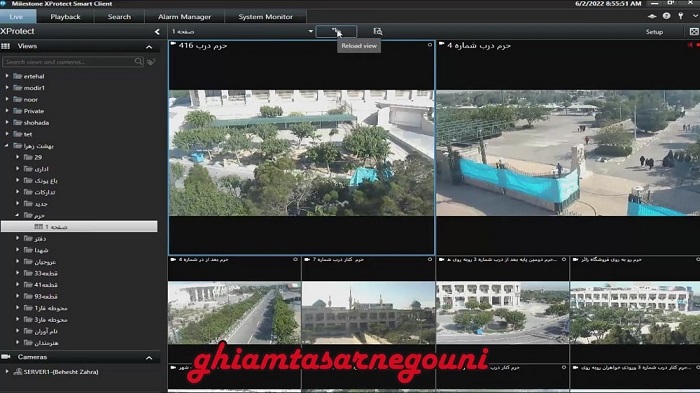
A leaked document, revealing the Iranian regime's comprehensive plan to preempt protests and strikes, has been unveiled by "GhyamSarnegouni" (“Rise to Overthrow” in Persian), an Iranian dissident group.
The document is a “very confidential” letter from the regime’s Cultural and Defensive Publicity Organization of the General Staff of the Armed Forces addressed to the Secretary of the Supreme National Security Council and the commander of Imam Sadiq HQ. It outlines suggestions and strategies for addressing potential protests and strikes on Iran’s National Teachers’ Day and International Worker’s Day.
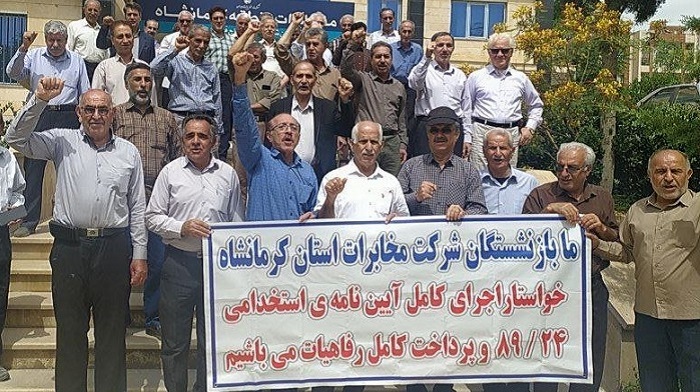
According to recent reports, Iran is witnessing intensified public discontent as the regime broadens its crackdown against dissidents, imposing stringent regulations including harsh dress codes on female students.
Several students have been threatened with suspensions or expulsions by campus security for non-compliance with the misogynist hijab dress code, highlighting the regime’s struggle to suppress the burgeoning anti-dictatorial sentiment.
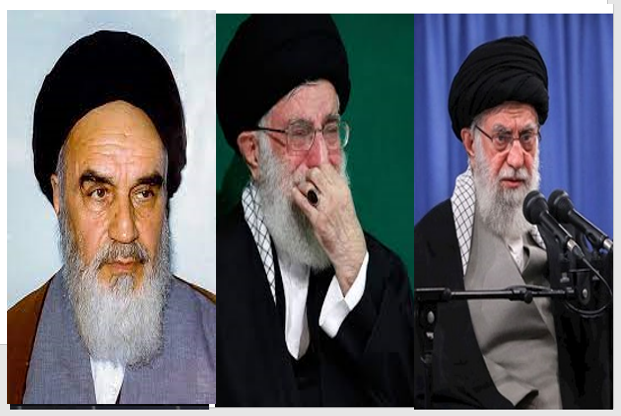
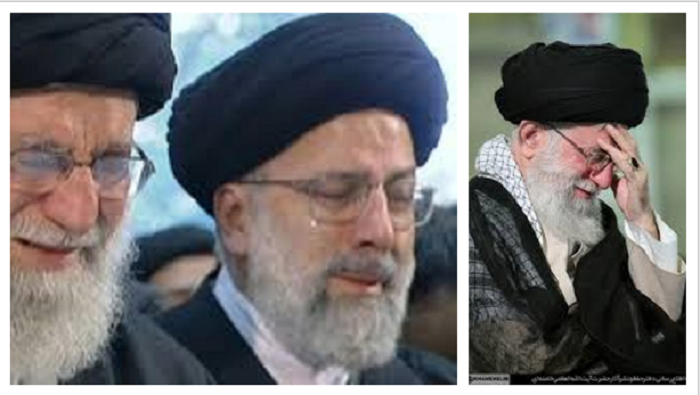
On this day, Supreme Leader Ali Khamenei exposed the regime's vulnerabilities in a speech commemorating Khomeini.
This comes amidst a national uprising that has shaken the foundations of Khamenei’s so-called “consolidated system.” Khamenei chastised the protestors, dubbing them as “armed thugs.” Despite their courageous resistance against the regime’s armed forces, the Supreme Leader attempted to vilify these unarmed individuals in an effort to twist the truth and gain control of the narrative.
On Sunday, Iran’s nationwide uprising entered its 262nd day as citizens continue to revolt against the regime’s oppressive policies and worsening economic conditions.
Reports have emerged of sustained attacks on the regime’s interests by protestors and local youths in retaliation to the government’s recent surge in executions.
Two years have elapsed since Ali Khamenei, the supreme leader of the Iranian regime, appointed Ebrahim Raisi as president in an attempt to fortify power amidst societal unrest.
Despite Raisi’s recurring claims about controlling inflation, Iran’s current economic situation starkly contradicts his rhetoric.
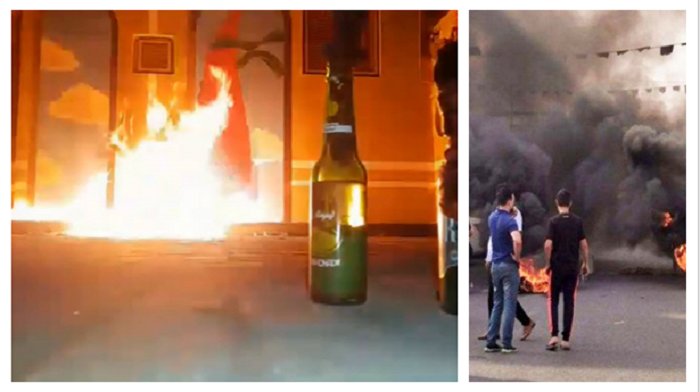
Young activists in Iran have been courageously defying the authoritarian regime, launching targeted strikes against security bases and judiciary buildings across the country.
This wave of civil unrest has been sparked by the mullahs’ brutal suppression of public demonstrations and a chilling escalation in state-sanctioned executions. With protests spreading to at least 282 cities, Iranian opposition sources claim that over 750 individuals have been killed, and more than 30,000 have been arrested by regime forces.
The resistance campaign has seen particular bravery from the youth of Yasuj and Bavi, in southwest Iran. These young activists have launched assaults against two bases of the IRGC’s paramilitary Basij units and a local State Security Forces site, causing explosions and fires at the targeted sites.
— People's Mojahedin Organization of Iran (PMOI/MEK) (@Mojahedineng) June 3, 2023
This is a direct response to the regime’s recent spike in executions. Reports indicate that their actions resulted in multiple explosions, emphasizing their demand for change. The unrest is not limited to smaller cities. In Tehran, locals from the Ekbatan and Shahrak-e Bagheri districts openly defied regime dictator Ali Khamenei, chanting anti-regime slogans into the night.
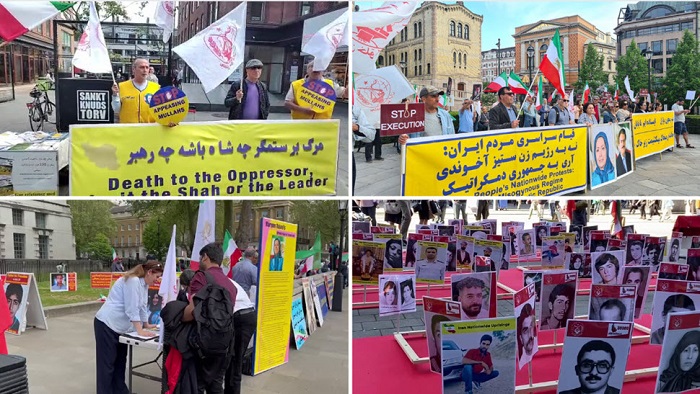
The struggle is also resonating across the globe. The Iranian Diaspora has been vocal in expressing solidarity with their compatriots, staging rallies in numerous cities including London, Oslo, Vienna, Stockholm, and multiple locations in Germany and Canada. These rallies, organized by the Iranian opposition coalition National Council of Resistance of Iran (NCRI) and the People’s Mojahedin of Iran (PMOI/MEK), mark the 34th anniversary of the death of the regime’s founder, Ruhollah Khomeini, on June 3.
June 3 – Göttingen, Germany Freedom-loving Iranians and supporters of the #Iran opposition PMOI/MEK rallied in solidarity with #IranRevolution while emphasizing on the role of Iranian women and the regime's human rights violations.#No2ShahNo2Mullahspic.twitter.com/mgbcSsciRW
— People's Mojahedin Organization of Iran (PMOI/MEK) (@Mojahedineng) June 4, 2023
Participants are voicing their opposition to all forms of dictatorship, backing NCRI President-elect Maryam Rajavi’sten-point plan for a democratic Iran, and rejecting a return to monarchical rule.
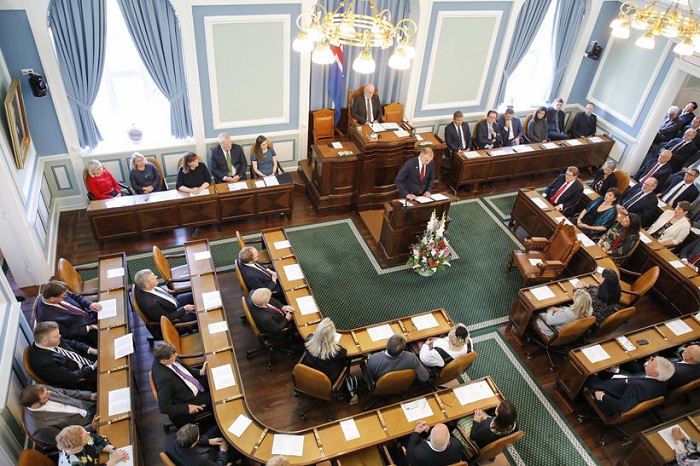
The Icelandic MPs also expressed their support for Maryam Rajavi’s ten-point plan, standing in solidarity with the Iranian people’s demand for a democratic republic that separates religion and state.
In a significant international development, the majority of members in the Parliament of Iceland, have issued a statement decrying Iran’s recent spate of mass and extrajudicial executions, and supporting the struggle for democracy in Iran.
This collective action demonstrates an increasingly unified front against the Iranian regime. It calls on the international community to recognize the IRGC as a terrorist organization and hold the regime accountable for crimes against humanity, illustrating an escalating urgency for change.
In a series of well-planned cyber-attacks, the dissident group ‘GhyamSarnegouni’ has delivered a blow to the Iranian regime, unveiling the depth of its internal disputes, the misuse of funds, and the evasive tactics aimed at bolstering regime security.
Following the publication of leaked documents, Iranian officials and state media are left scrambling to mitigate the extensive damage. On May 29, ‘GhyamSarnegouni’, translating to “Rise to Overthrow” in Persian, claimed responsibility for the shutdown of several websites and servers connected to the Iranian regime’s presidency.
Recently leaked document from the archives of the Iranian regime’s presidency has thrown light on the real reasons behind the deposition of Ali Shamkhani, the former head of the Supreme National Security Council (SNSC), who was recently replaced by Ali Akbar Ahmadian.
Recently leaked document from the archives of the Iranian regime’s presidency has thrown light on the real reasons behind the deposition of Ali Shamkhani, the former head of the Supreme National Security Council (SNSC), who was recently replaced by Ali Akbar Ahmadian.
The document was released by “GhyamSarnegouni” (“Rise to Overthrow” in Farsi), a dissident group that managed to penetrate the presidency’s servers on May 29, seizing a significant array of classified documents. This represents the latest evidence of high-level instability within the regime, as revealed through internal memos.
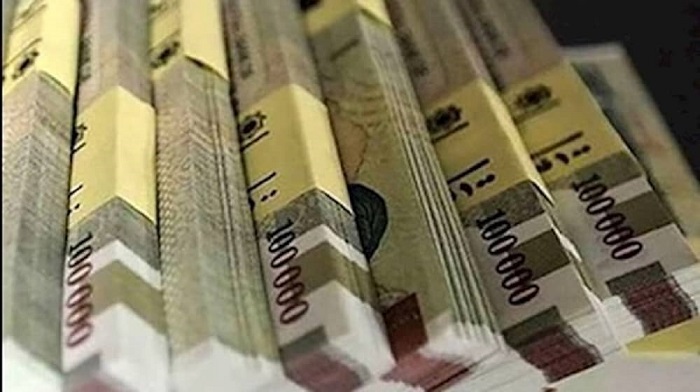
On May 31, state-run Khabar-online painted a stark picture of Iran's economic woes, suggesting inflation could reach historic three-digit heights, unseen for 78 years.
This gloomy forecast presents a stark contrast to comments made by the country’s president, Ebrahim Raisi, just three months prior.
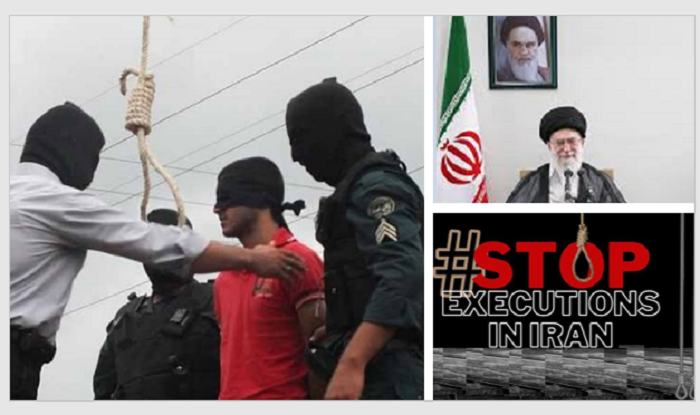
Khamenei’s strategy to suppress public anger and dissent by resorting to the execution of prisoners is rapidly intensifying. On Thursday, June 1, six prisoners were hanged by Khamenei’s executioners in Kahnuj, Kashan, and Isfahan prisons.
Khamenei’s strategy to suppress public anger and dissent by resorting to the execution of prisoners is rapidly intensifying. On Thursday, June 1, six prisoners were hanged by Khamenei’s executioners in Kahnuj, Kashan, and Isfahan prisons.