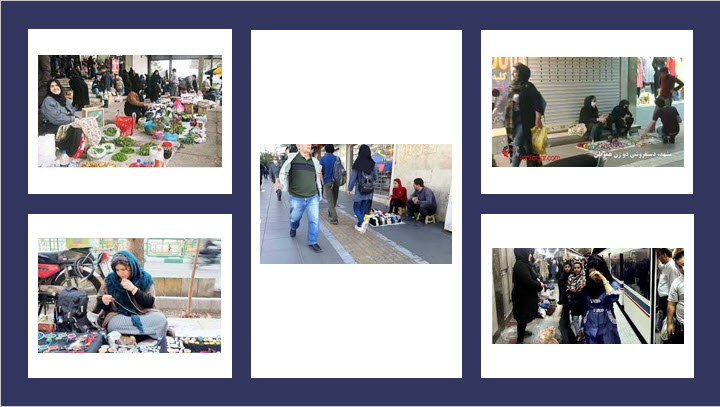
Approximately 1 million people, or 19 percent of the population, do not get any form of social assistance.
According to the Islamic regime’s Speaker of the Parliament, there are around 5 million women heads of households in Iran. Official data suggest that 52 percent of the 5 million women heads of households do not have insurance or pensions, which only reflects a small portion of the reality. 38 percent of these women belong to one of society’s three lowest socioeconomic classes.
“We, Iranians, are political prisoners of this authoritarian regime, and we will use the 10 Day Fajr Ceremonies to restart widespread protests,” the group stated.
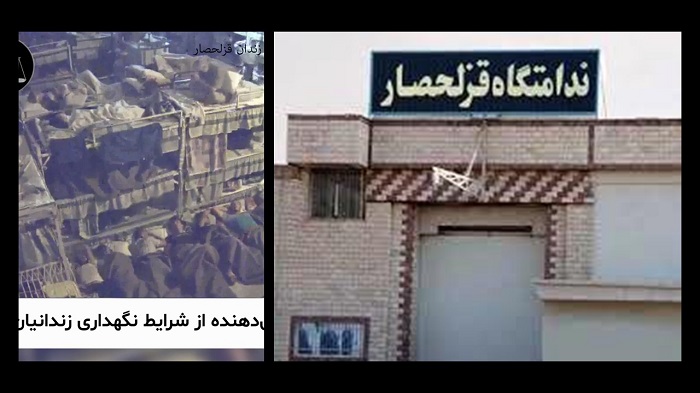
On February 7, an Iranian cyber organization known as Edalat-e Ali (Persian for Imam Ali’s Justice) told RFERL (Radio Free Europe) that it had hacked the monitoring network system at Karaj’s Ghezel Hessar jail and obtained information concerning the Iranian regime’s crimes.
“We, Iranians, are political prisoners of this authoritarian regime, and we will use the 10 Day Fajr Ceremonies to restart widespread protests,” the group stated.
The cost of basic consumer goods is increasing on a daily basis. Many basic goods, such as bread, rice, fish, and other items, have increased by 142 percent, according to Iran’s state media. With a 261 percent growth, lentils are in first place.
On February 4, a heart-breaking video of a young mother begging for two eggs to feed her children went viral on Iranian social media, with the promise of paying for them later. As a result of increased costs, more Iranians are being forced into poverty and unable to make a decent livelihood.
The cost of basic consumer goods is increasing on a daily basis. Many basic goods, such as bread, rice, fish, and other items, have increased by 142 percent, according to Iran’s state media. With a 261 percent growth, lentils are in the first place. Chickpeas come in second with 218 percent and sodas come in third with 201 percent. For lunch, the majority of employees consume merely bread and soft drinks.
Because the Shah security service had devastated secular, democratic, and patriotic organizations, Khomeini was able to hijack the revolution, betray the revolution’s lofty aims, and install Islamic tyranny.
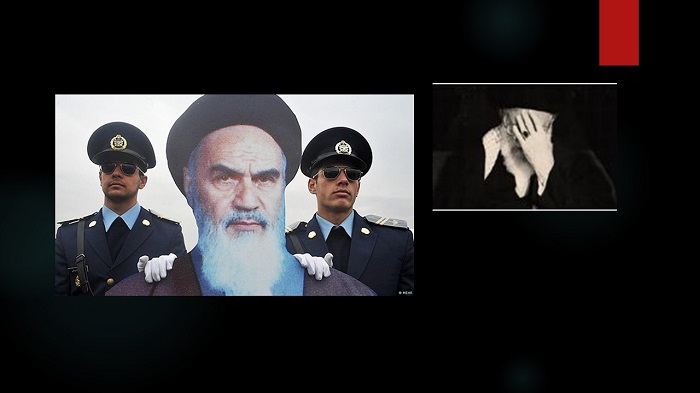
As the 43rd anniversary of the anti-monarchic revolution in 1979 approaches, the Iranian regime’s media and authorities point to some glimpses of the Iranian people’s wretched and disastrous situation since Ruhollah Khomeini first set foot in Iran 43 years ago.
Because the Shah security service had devastated secular, democratic, and patriotic organizations, Khomeini was able to hijack the revolution, betray the revolution’s lofty aims, and install Islamic tyranny.
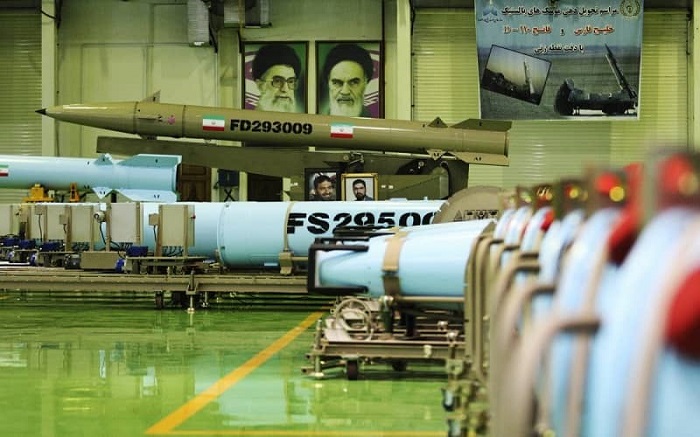
The regime, on the other hand, never gave up the pursuit of an atomic bomb because it needs one to ensure its rotten survival. Mrs. Rajavi stated that handing up the bomb would be in violation of all security standards.
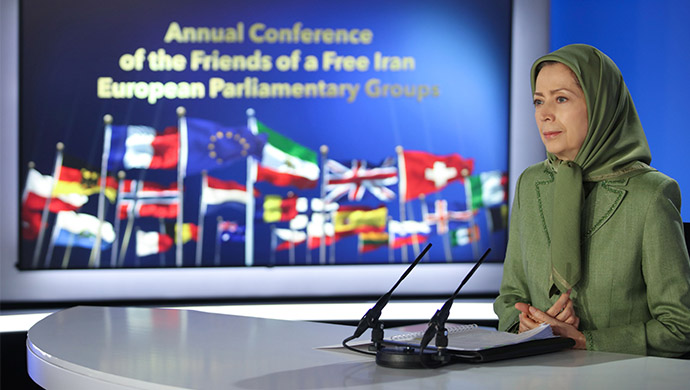
Members of Friends of a Free Iran (FOFI) Committees from throughout Europe met online on the 43rd anniversary of Iran’s 1979 Revolution to debate the situation in Iran and the challenges presented by the mullahs’ dictatorship to the region world. Mrs. Maryam Rajavi, the president-elect of the National Council of Resistance of Iran (NCRI), as well as lawmakers and politicians from the United Kingdom, Germany, France, Italy, Switzerland, Finland, Norway, the Netherlands, Belgium, Spain, Portugal, Ireland, Romania, Malta, Lithuania, Slovenia, Poland, and San Marino, attended the conference.
“The budget for 2022 also shows that next year people should see inflation and rising prices, and I think there will be so much pressure on people that they will forget the debate about the stock market.”
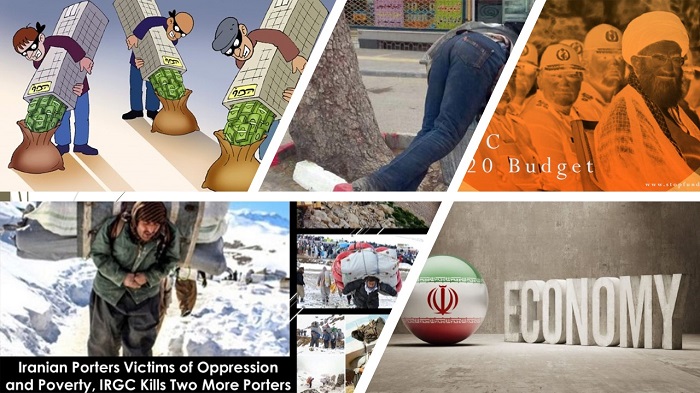
Despite President Ebrahim Raisi’s empty promises, who promised an 8 percent economic boom, regime specialists claim the opposite. On January 27, the state-run daily Arman slammed the regime’s budget plan, writing: “The 2022-2023 budget is related with uncollectible revenues, and current budgets that have expanded have fuelled inflation.” Construction budgets are also minor, which could serve as a safety valve to improve the economy. There is no mention of the seventh plan, which was supposed to close the 2022-2023 budget.”
As the regime’s top military officer, Bagheri is obviously aware that lifting sanctions will only increase the regime’s belligerence across the Middle East.
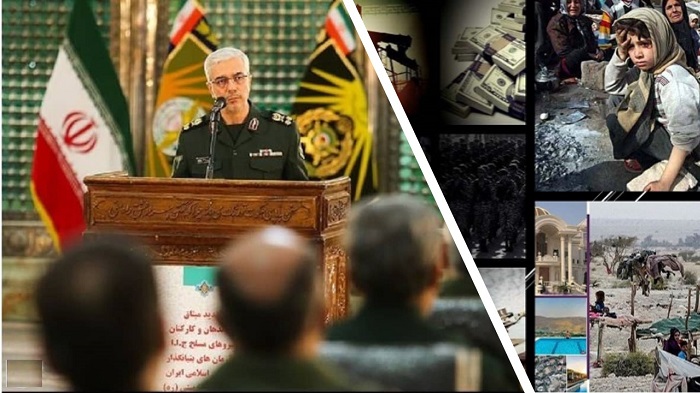
According to the regime’s semi-official Tasnim news agency, which is linked to the Revolutionary Guards (IRGC) Quds Force, Maj. Gen. Mohammad Bagheri, Chief of Staff of the Iranian regime’s armed forces, said on Monday that if US sanctions are lifted, Iran will be one of the world’s largest arms exporters.
On Tuesday, the regime’s Health Ministry released the mullahs’ contrived Covid-19 data, which showed 38,757 new cases and 114 deaths in the previous 24 hours. In addition, 2724 patients are in intensive care units, and 2744 new cases have been admitted to hospitals.
According to statistics recorded by the Iranian opposition the People’s Mojahedin of Iran (PMOI / MEK Iran), as of Tuesday afternoon, local time, February 8, over 503,800 people had died of the new coronavirus in 547 cities spread throughout all 31 provinces of Iran. The regime’s official death toll is 133,048, which is around a fourth of the true total.
The coronavirus death toll in various provinces include: 117,655 in Tehran, 40,505 in Razavi Khorasan, 34,960 in Isfahan, 30,365 in Khuzestan, 19,150 in Fars, 18,993 in West Azerbaijan, 18,250 in Mazandaran, 17,420 in Gilan, 14,668 in Alborz, 13,885 in Sistan & Baluchistan, 13,592 in Kerman, 9424 in Kermanshah, 9208 in Markazi (Central), 8375 in Hormozgan, 8368 in Yazd, 6640 in Semnan, 6483 in North Khorasan, 6435 in Ardabil, 5944 in Qazvin, and 3829 in Kohgiluyeh & Boyer Ahmad. This is in addition to reports obtained from other provinces.
The Iranian nuclear issue has been one of the most critical foreign policy concerns for the northern hemisphere and its governments for practically the entire life span of the new century.
The Wall Street Journal reported on Thursday, February 3, that even if world powers reach an agreement with Tehran, the government would be able to produce a nuclear weapon within a year, therefore rendering any agreement worthless.
The Iranian nuclear issue has been one of the most critical foreign policy concerns for the northern hemisphere and its governments for practically the entire life span of the new century. Governments have struggled to figure out how to prevent a new nuclear-armed harsh state like Iran, regardless of their political leanings.
Tehran has strengthened its stance, demanding immediate release from all sanctions as well as unattainable guarantees that no future administration will be able to abandon it as US President Donald Trump did in 2018.
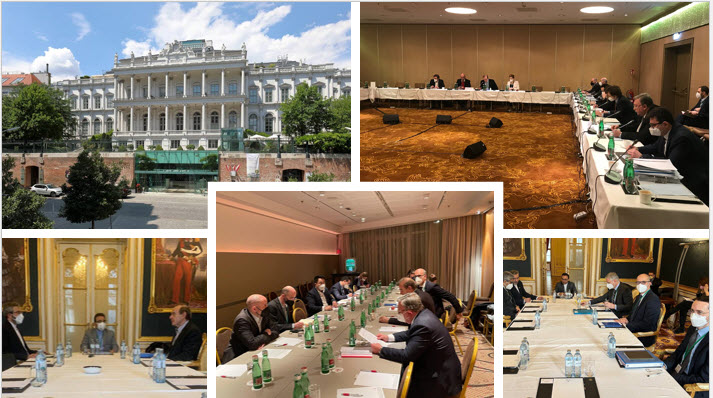
The Western parties to the 2015 Iran nuclear deal are in danger of breaking their prior vows that the talks would not go on indefinitely as negotiations over the pact’s future begin in Vienna. Following the new Iranian administration’s five-month delay in resuming negotiations in November, several American and European officials set an unofficial deadline of late January or early February for their Iranian counterparts to accept a compromise that trades immediate restrictions on their nuclear program for relief from US sanctions.