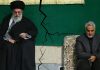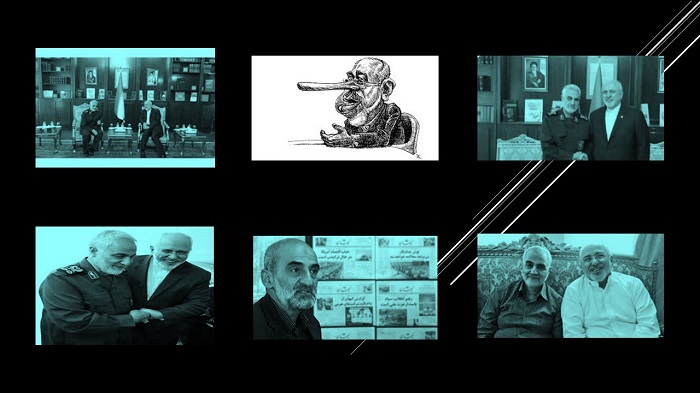
The infighting in the Iranian regime continues. A few years ago, the different factions of the regime were able to give the impression that all was rosy in the leadership of Iran, but now the situation is very different.
The infighting in the Iranian regime continues. A few years ago, the different factions of the regime were able to give the impression that all was rosy in the leadership of Iran, but now the situation is very different.
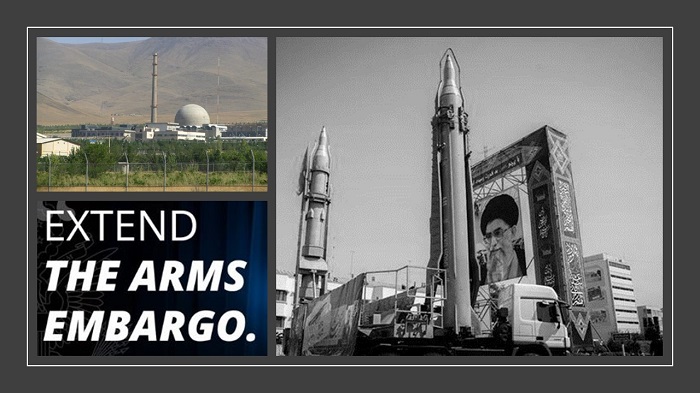
The Trump administration is adamant that it is going to continue pressuring the Iranian regime. Its current mission is to extend the arms embargo that is due to expire mid-October this year.
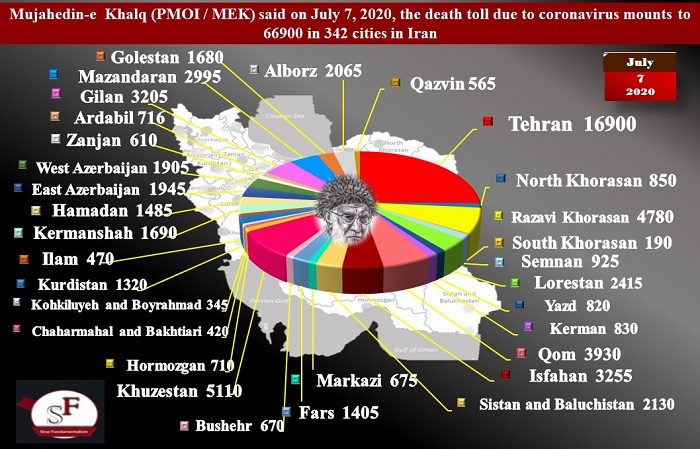
The People’s Mojahedin Organization of Iran (PMOI / MEK Iran) announced on Tuesday, July 7, 2020, that the COVID-19 death toll in Iran exceeds 66,900. The number of victims in Tehran is 16,900.
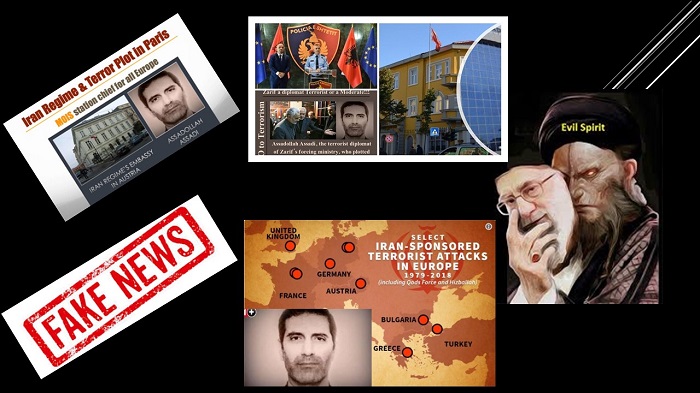
The Iranian diplomat who attempted to bomb the ‘Free Iran Rally’ back in 2018 in Paris is in prison for at least another year, according to the state-run Keyhan daily.
 During the first few years of the MEK’s existence, its founders focused on laying the groundwork for the movement’s future growth and success. They recruited new members and established leaders within the group to build strong networks of supporters. The MEK’s founders were firmly committed to the idea that the struggle for freedom is a science that requires study to be acquired, so they painstakingly researched all philosophical doctrines that could help them succeed where previous movements had failed. After an exhaustive study, Hanifnejad and his co-founders decided that democratic Islam was the ideology best suited to the aspirations of the Iranian people.
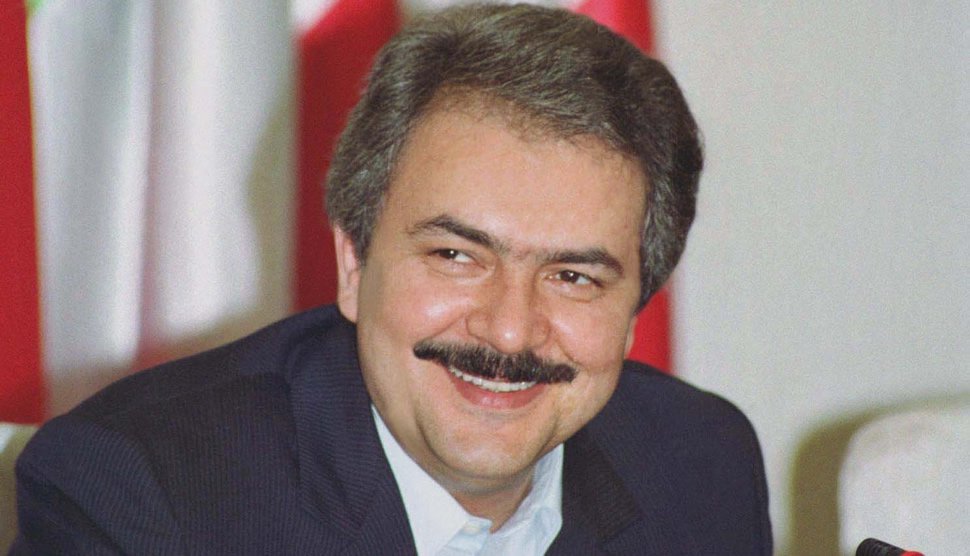 Massoud Rajavi was the only surviving leader of the MEK after the Shah’s purge in 1975, thanks to an international campaign to save his life spearheaded by his brother, Kazem Rajavi. Kazem, a respected lawyer and politician in Switzerland, gathered support from several organizations and politicians and convinced them to pressure the Shah to convert Massoud Rajavi’s death sentence to life in prison. One of the politicians involved in the campaign was Francois Mitterrand, the head of the French Socialist Party and future President of France.
 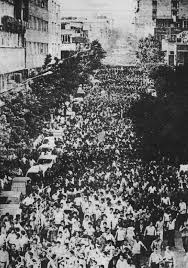 The MEK opposed the mullahs’ regime, founded by Ruhollah Khomeini, from the moment it began. The organization warned the Iranian people of the threat posed by the fundamentalist regime, including the repression of women, religious minorities, and opposition groups. The MEK quickly became known as the primary defender of freedom in the country, building a wide base of support among people across Iran. Young people and intellectuals were particularly drawn to the movement, and within two years, the MEK has become the largest political organization in Iran.
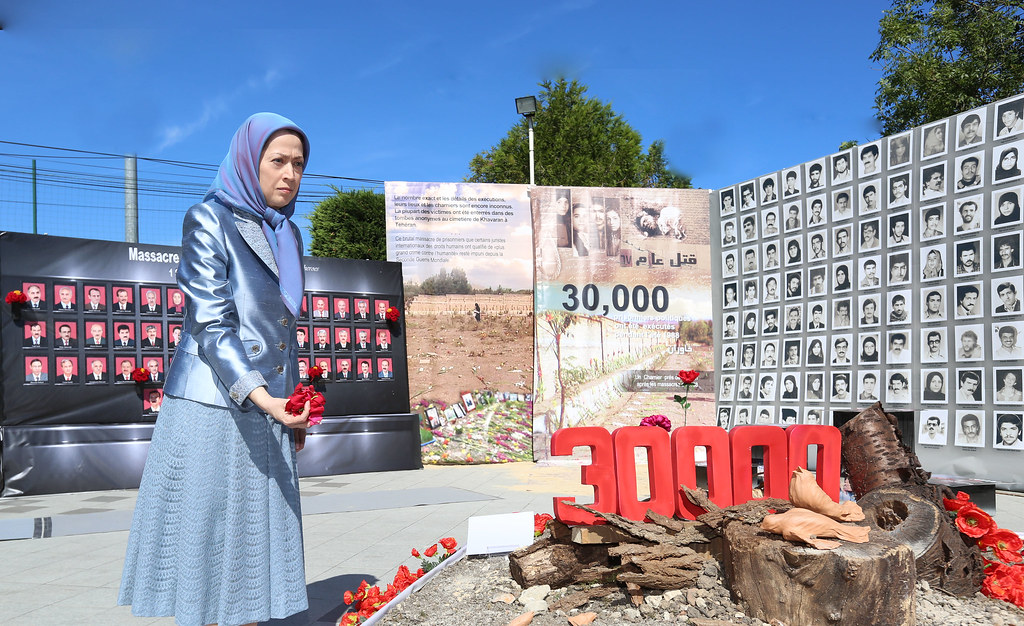 1988: The Massacre of MEK Members and Supporters
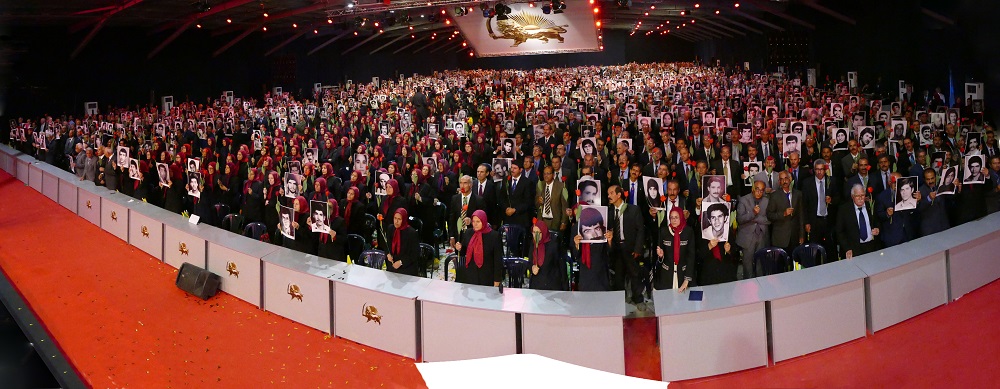 In 2016, an international effort led by Mrs. Maryam Rajavi completed the relocation of the MEK members still living in Iraq to a new home in Albania. The relocation came after years of missile attacks by the Iranian regime and its Iraqi proxies. The new location allowed the MEK members to focus all of their efforts on fighting for freedom and democracy in Iran instead of fighting off missile attacks. It was also a major blow for the Iranian regime because the mullahs understand that every step forward for the MEK is a step toward the regime’s destruction.
The uprising that started in December 2017 in Iran was a powerful sign of unrest that rattled the religious dictatorship and all its factions. The protests started for seemingly economic grievances but rapidly expanded to widespread and continuous calls for the overthrow of the regime in its entirety. Protesters chanted “Death to Khamenei”, “Death to Rouhani”, and “Reformer, Hardliner, the game is now over”, targeting the entirety of the clerical coalition that rules Iran.
The protests continued throughout 2018 and encompassed workers, farmers, rural communities, teachers, defrauded investors, truckers, environmentalists, and women, and students. The protesters denounced the regime’s foreign policy with “Let go of Syria, think about our condition” and “Our enemy is here, but they lie to us that it’s America.”
International human rights organizations such as Amnesty International estimate about 7,000 arrests by the regime during the uprisings and protests, and the regime itself has admitted to at least 4,600 arrests (Hassan Abbasi, Ofogh State TV, June 1, 2019). The Iranian Resistance has reported that as of January 2019, a more accurate figure is around 8,000 according to internal reporting and research. Security forces killed at least 36 persons during the uprisings, 11 of them under brutal torture in regime detention centers.

The PMOI/MEK’s resistance units have been very active in all cities across Iran, informing and assisting the public on ways to resist the regime. The MEK expanded its “Resistance Units” over the past year. Their activities include torching large billboards of Khamenei and Rouhani in busy districts of Tehran and other cities and destroying regime symbols at Bassij and IRGC centers. They write slogans against the regime, distribute informational leaflets and drape bridges in busy districts of Tehran with huge banners of Mrs. Rajavi. The regime is very alarmed that these activities will encourage the public to further rise against it.
The PMOI/MEK has also organized “popular councils” which have been very active in all cities across Iran, informing and assisting the public on ways to resist the regime. While members of Resistance Units are from the younger generation, members of popular councils are people from all ages and sectors of the population who take part in certain social activities.
These councils have provided advice and opportunities to organize independently for cooperative assistance to stricken compatriots ignored by the corrupt clerical regime. One exemplary campaign was during the disastrous floods that overtook Iran in April, May, and June. PMOI/MEK popular councils gathered material assistance donated in various neighborhoods and trucked and distributed them to stricken areas. People bitterly complaining that the government had done nothing to assist them met the council members with a warm welcome.

The regime faces a dilemma by pretending that the PMOI/MEK has no popular support in Iran, and yet increasingly needing to point out the active presence of PMOI/MEK resistance units and councils to dissuade the public from joining them. This trend has led to increasing news of resistance activities in regime news media in recent months.
Public news of sentences of PMOI/MEK activists has been frequently surfacing in the news media. On May 20, a so-called revolutionary court in Tehran sentenced a 34-year-old PMOI/MEK activist and member of a resistance unit to death and three others to five years in prison for engaging in non-violent dissemination of anti-regime literature.
The PMOI/MEK has announced that the actual figures for arrests and sentences have been much higher. Due to various security concerns and the need for secrecy to protect sources and methods, the PMOI/MEK published a limited list of names recently of 28 detainees in over 13 cities, appealing to international human rights organizations to take urgent action for their release.
In the past 12 months up to June 2019, popular uprisings and protests have swept through 556 cities and towns and industrial centers in Iran, consisting of 1354 workers’ actions in 146 cities.
A brief tally of organized protests and strikes is:
PMOI/MEK resistance units and councils with thousands of dedicated members in over 150 cities and towns continue to organize and campaign for regime change in Iran leading to daily protest actions in various cities.

Introducing a new book by Struan Stevenson
This European delegation report recalls the suffering of several thousand men and women members of the Iranian democratic opposition, People’s Mojahedin Organization of Iran (PMOI or MEK). They were living in exile in Camp Ashraf and later Camp Liberty in Iraq. After the withdrawal of the US military, they were left at the mercy of the vicious Iraqi Prime Minister Nouri al-Maliki and his masters in Tehran. Finally, the tiny country of Albania agreed to provide them with a safe haven in Tirana.
Now the “Ashrafis” have a home and have made friends with the local Albanians. Their fortitude and stamina have acted as a beacon of hope for the 80 million beleaguered citizens of Iran who hope and pray for freedom from oppression and now look to the MEK as the harbingers of the future of democracy, justice, and peace.
The author visited the Iranian opposition center, Ashraf III, with 2 senior Members of the European Parliament, Tunne Kelam & Jaromir Stetina, and spoke with the residents to hear their stories as well as observing the progress they have made in setting up their new home.
The report goes into some detail of the chaos that has engulfed Iran, leading to the first anniversary of the nationwide uprising. It shows how the clerical regime has reacted with brutal force, killing, imprisoning, and intimidating the Iranian population, rather than seeking to resolve the crisis. The report shows how the mullahs have reacted to the threats to their regime by ramping up their sponsorship of international terror and cyberwarfare, as well as a demonization campaign against their main organized opposition.
The report is highly critical of the EU’s High Representative for Foreign Affairs – Federica Mogherini – for her continued attempts to ignore the blatant abuse of human rights that take place in Iran on a daily basis.
To buy the book, order on Amazon:
https://www.amazon.com/dp/1527236935/ref=sr_1_1?ie=UTF8&qid=1549416893&sr=8-1&keywords=9781527236936

Museum 120 years of struggle for freedom in Iran- Ashraf-3 Albania home to members of the MEK
Written by Staff Writer on 20 January 2020.
Explore the Iranian Resistance’s historical exhibition entitled, “120 Years of Struggle for Freedom,” that encapsulates the glorious struggle of Iranians for freedom.
A struggle to break free of the bondage of feudal Shahs and reactionary clerics to enter the modern era of democratic-republican governance. A struggle that has faced innumerable challenges through the past century and even today.
Explore many of the spaces and displays in this museum and learn about the rich history of a heroic effort by Iranians to achieve freedom and progressive society, and the high price that they have paid for it in the tens of thousands of lives laid down for this noble goal.
Virtual Tour of Memorable Exhibition in Ashraf 3
Launch Tour – Explore Exhibition

Iran witnessed a series of protests in November 2019 and January 2020 that were unprecedented in the past four decades.
Shaking the regime in its entirety, the uprising in November quickly erupted in at least 191 cities. Assessments indicate that it was the most important challenge the Iranian regime has ever faced.
The protests were sparked by a gas price hike, however, due to the explosive situation of the society, they dramatically expanded all over the country in just 24 hours. Demanding regime change, Iranian people chanted against the Supreme Leader and the regime in its entirety.
The high volume of the protests forced the regime to dispatch all its suppressive forces, in particular the Islamic Revolutionary Guards Corps (IRGC), onto the streets, killing people in cold blood.
The Chairman of the Parliament’s National Security Committee Mojtaba Zolnour admitted that there had been harsh clashes between angry protesters and security forces in 800 locations across the country, including 147 points just in the capital Tehran.
Senior commanders of the IRGC who had been dispatched to the scenes, later compared the conflicts with the harshest scenes of the Iran-Iraq war saying: “God saved the regime.“
Confronting the bloody suppression, the protesters, mainly from the low sectors of the society, defended themselves, setting fire to some 900 gas-stations, 1000 governmental banks, many governorate buildings, and state seminaries.
One day after the beginning of protests, the top officials of the regime, including the Supreme Leader, stressed on the role of the People’s Mojahedin, or Mujahedin-e Khalq (PMOI/MEK), and its Resistance Units in organizing and leading the protests.
In order to cover the dimension of suppression and prevent the expansion of the protests throughout the country, in an unprecedented measure, the Iranian regime shut down the Internet for more than a week.
Relying on its vast social network, the MEK announced the death toll on a daily basis. Based on the MEK’s information, some 1500 protesters were killed, 4000 were injured, and another 12000 were arrested. This death toll was later confirmed by the top officials of the US and Reuters. Reuters referred to three sources in the regime’s Interior Ministry. Iran’s regime not only has not provided any information about the victims of the Iran protests but has prevented the issue from being raised in public; however, so far the MEK has revealed the names of more than 750 martyrs.
In fear of a new bout of protests and eruption of the society, the regime prevented the families to hold mourning ceremonies for the victims.
The November 2019 uprising happened less than two years after the nationwide uprising in January 2018 that erupted in 140 cities across the country. This indicates the deteriorating situation in Iranian society that will result in an end to the mullahs’ rule, the inefficiency of suppression as it was before, and uncontrollable situation for the regime.
Protesting against the downing of a Ukrainian airliner by the IRGC, which left 176 people dead in January 2020, once again Iranian people flooded the streets in Tehran and cities of ninety provinces in Iran. This time, college students representing the middle class in Iran were in the front line. The slogans were focused on the Supreme Leader Ali Khamenei and the IRGC that represent the regime in its entirety.
Chanting “down with the tyrants, be it the Shah or the Leader (referring to the Supreme Leader)” and “Neither the crown nor the turban. The mullahs are goners,” protesters showed that the Iranian people see the future in denying the dictatorship in any form and demanding democracy.
Demanding regime change in Iran is the common point of the protests in Iran.
By chanting “Reformists! Hardliners! The GAME IS OVER!” in January 2018 protests, Iranian people disavowed the regime in its entirety. In August 2018, a prominent theoretician of the Iran regime, Saied Hajjarian, said: “If there will be a situation like other democratic countries in Iran, holding transparent elections without interference by the government and taking off the cover of greenery, there would be none of us, neither you nor me, there will be neither hardliners nor reformist.”
Rejecting both the past (monarchy) — and the present (theocracy), Iranian people called for a better and different future in the January 2020 uprising.
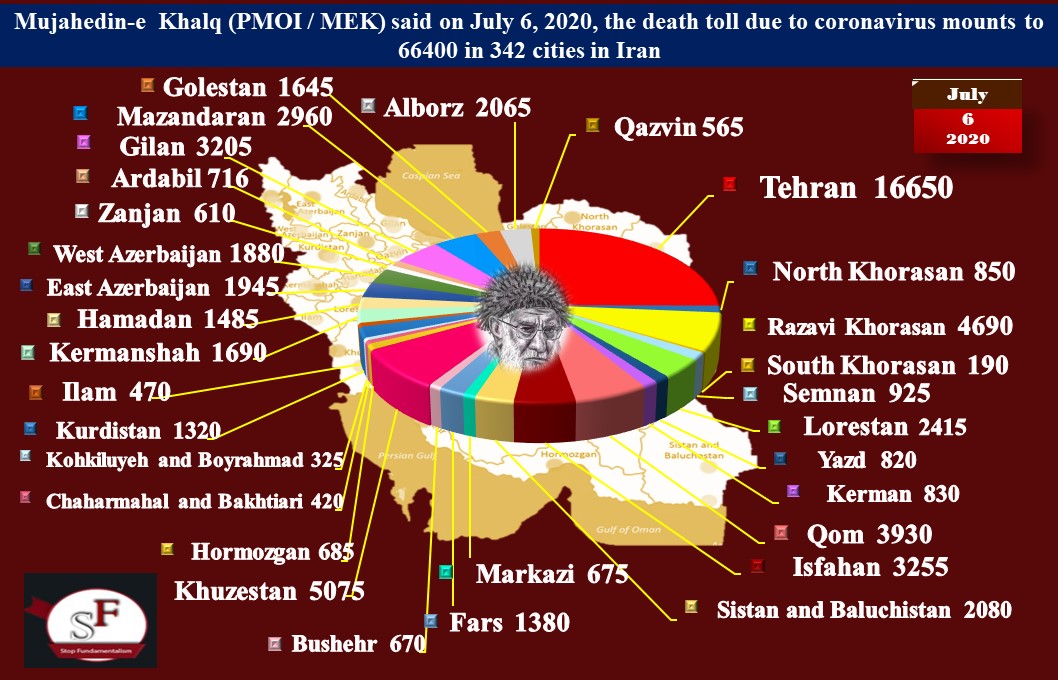
The Covid-19 crisis in Iran has gone from bad to worse, especially in Tehran. Every bed available in Tehran’s hospitals that has been allocated for Covid-19 patients is already full. The number of fatalities in the last 75 days is unprecedented, according to Tehran health authorities.
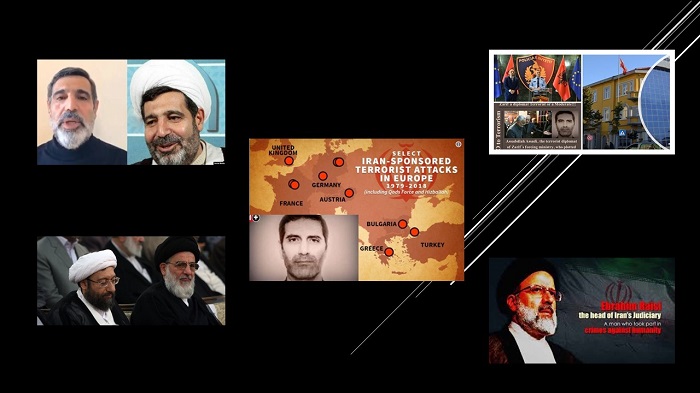
It was announced recently that former Iranian judge and fugitive Gholamreza Mansouri was arrested and being kept under police watch in a hotel in Bucharest, Romania. He was accused of accepting a huge bribe while a judge.
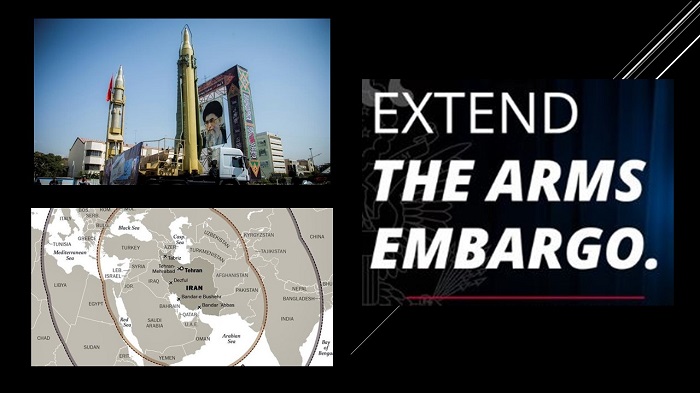
The United States has been focused on cracking down on the Iranian regime since President Trump took office. Even during the election campaign, President Trump made it clear that he would not follow in the footsteps of his predecessors and turn a blind eye to the atrocities that the Iranian regime is involved with.
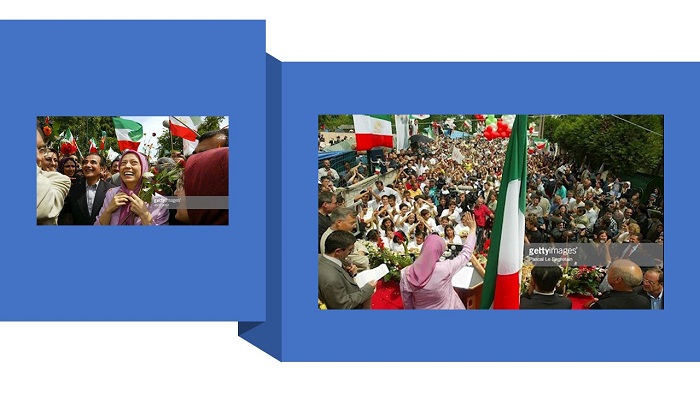
The MEK Resistance Units in Iran have bravely taken to the streets of many Iranian cities to spread the message of opposition to the mullahs’ regime and praise the words of Mrs. Maryam Rajavi, the president-elect of the National Council of Resistance of Iran (NCRI).
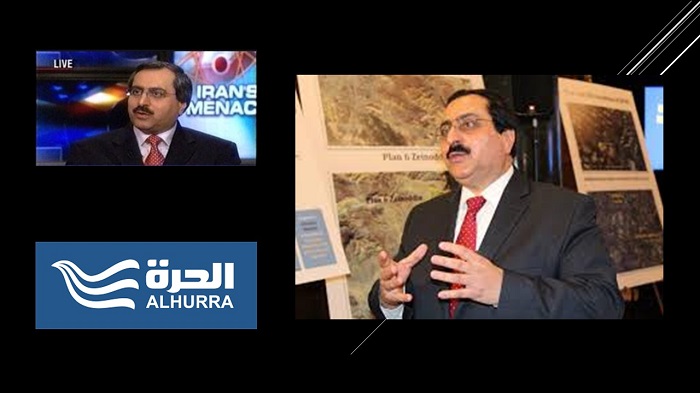
Alhurrah TV interview, With Mr. Jafarzadeh, who represents the Iranian opposition NCR Iran. What kind of information do you have at this point about the cause of the different armed groups? There is this new group that just appear now.