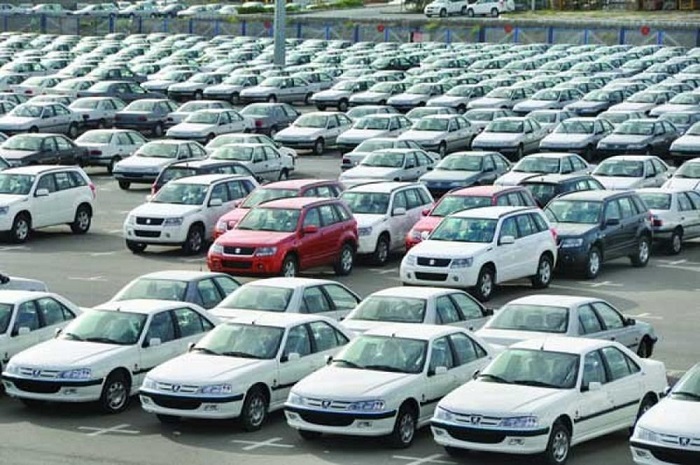
The IRGC thugs wasted no time in seizing control of the automotive industry, using Khamenei’s words as a springboard.
The Revolutionary Guards (IRGC) control Iran’s automobile industry. Meanwhile, regime officials, including members of parliament, are squandering public funds by importing the most expensive automobiles. The Iranian regime’s Supreme Leader Ali Khamenei invited the IRGC to plunder Iranians even more by entering the car manufacturing business on May 6, 2020.
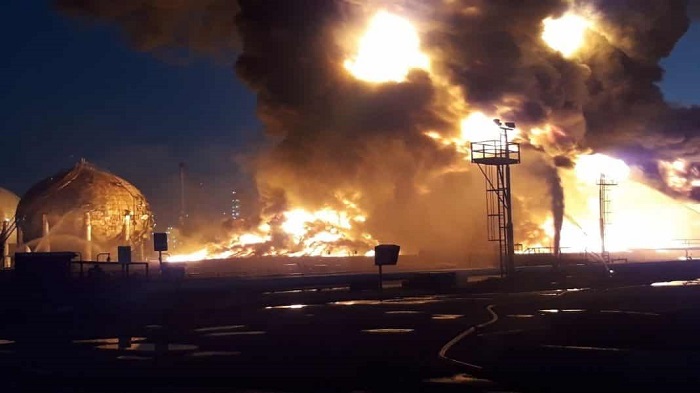
The incident was confirmed by the official state news agency, IRNA, which stated that the fire was extinguished and under control.
An explosion and fire at the Kavoshgaran Petroleum Refining Company, one of the Mahshahr Petrochemical Complex’s sites in southwestern Iran, severely injured two members of the unit on Thursday, March 31.
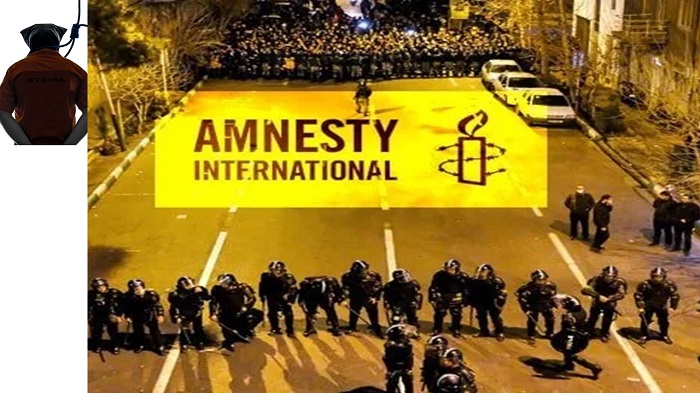
Apart from addressing the Iranian regime’s systematic human rights violations, such as the country’s high rate of executions per capita and the use of torture to extract confessions from detainees, Amnesty’s report also mentions the Iranian regime’s worst crime against humanity.
Amnesty International released its annual report on the state of human rights around the world on March 29. This comprehensive report, which spans four pages, sheds light on Iran’s appalling human rights situation under the ruling theocracy.
Apart from addressing the Iranian regime’s systematic human rights violations, such as the country’s high rate of executions per capita and the use of torture to extract confessions from detainees, Amnesty’s report also mentions the Iranian regime’s worst crime against humanity. Over 30,000 political prisoners were executed in the summer of 1988. The majority of them were members and supporters of Iran’s People’s Mojahedin of Iran (PMOI/MEK).
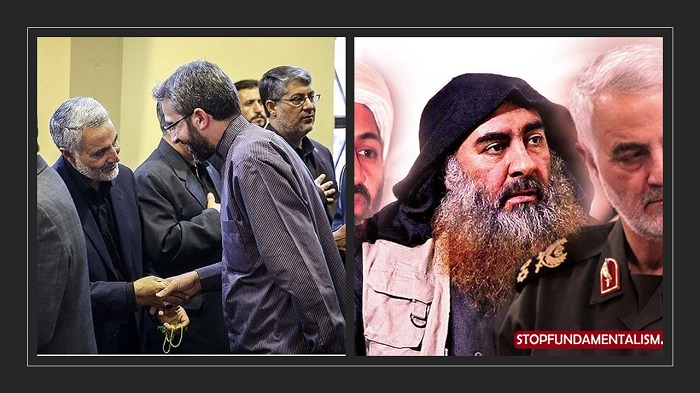
“double speak diplomacy” has always been a consistent doctrine of the Iranian clerical regime’s interactions with the rest of the world. It is a mindset that sees terrorism as a negotiating tool.
Tehran’s double speak diplomacy has relied on a “give and take” strategy for more than four decades. This “double speak diplomacy” has always been a consistent doctrine of the Iranian clerical regime’s interactions with the rest of the world. It is a mindset that sees terrorism as a negotiating tool.
The regime did not begin its first foreign policy encounter with a high-ranking delegation traveling abroad when it took power in 1979. It made headlines when it stormed the US embassy in Tehran and held 54 Americans captive for 444 days. Unfortunately, the story did not end there. It formalized the hostage-taking policy, established dozens of militant organizations, and terrorized four continents.
The mullahs’ dictatorship continues to spend hundreds of billions of dollars on growing their nuclear weapons program, developing their ballistic missile arsenal, fuelling global terrorism, and bolstering their domestic security apparatus.
Despite initial warnings about possible increasing inflation and inevitable economic collapse, the Iranian regime’s Majlis (parliament) passed a motion agreeing to abolish the subsidized currency (the US dollar exchanged at a reduced price of 42,000 rials) from this fiscal year’s budget. Around 270,000 rials per dollar is the current market exchange rate.
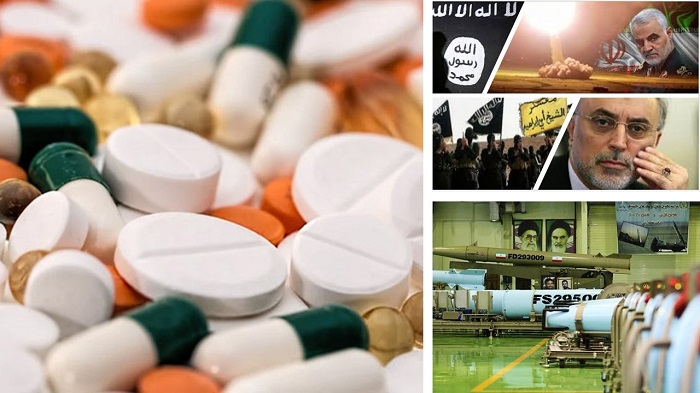
Officials from the regime’s Health Ministry have made contradictory statements about abolishing the subsidized dollar, which was used to import medicine at lower prices, prompting widespread alarm among ordinary Iranians about the quick rise in the cost of medicine.
In 1988, Khomeini saw the MEK as a serious threat to his rule and ideology because of its progressive interpretation of Islam. As a result, he made the decision to eliminate anyone who refused to submit and chose fate over faith.
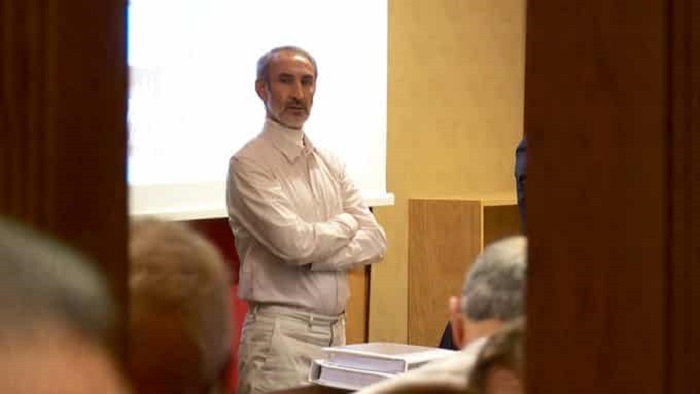
Hamid Noury’s trial entered its 80th session on Thursday, following his arrest in Sweden in 2019. Noury, a prison official in Iran, was apprehended for his role in the massacre of 30,000 political prisoners mostly members of the People’s Mojahedin of Iran (PMOI/MEK).
The regime’s Ministry of Oil receiving an annual budget of more than 100 trillion tomans, and when revenue is uncertain and not included in the annual general budget, no tax will be paid on it.
Despite being the country’s main source of economic and scientific progress, as well as infrastructure strengthening, oil is now a major source of corporate fraud. The heads of the regime’s oil industry are all accused of corruption, money laundering, and embezzlement in various cases.
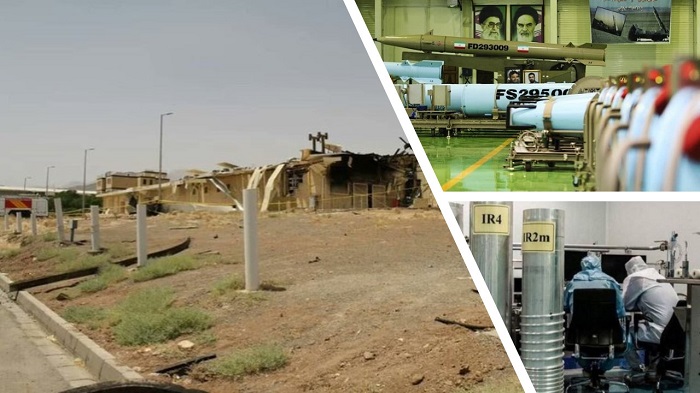
In responding with the assaults on the regime’s nuclear installations, each of the regime’s security and military groups accused their counterparts of demonstrating weakness and negligence. As a result, the regime decided to build a new organization in order to address the security breaches, in the hopes of preventing further attacks.
” Amnesty International also expressed concern that regime officials continue to enjoy impunity for past crimes, such as the massacre of political prisoners in 1988.
Amnesty International warned in its latest annual report on the state of human rights around the world that Iran’s regime has continued to violate the Iranian people’s basic human rights.
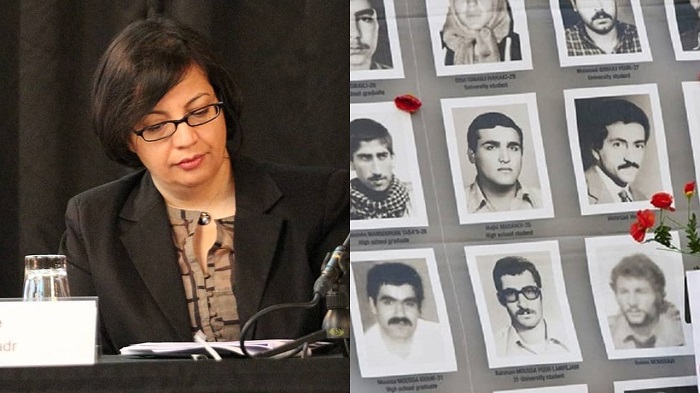
Ms. Sadr also gave insight on Tehran’s efforts to obliterate all mass graves and other evidence related to the 1988 massacre in a methodical manner.
The trial of Hamid Noury in Sweden entered its seventy-seventh session on Wednesday, March 23. Noury, an Iranian prison officer, was detained in Sweden in 2019 as a result of his involvement in the 1988 massacre of over 30,000 political detainees, predominantly members and supporters of the People’s Mojahedin of Iran (PMOI/MEK).
Ms. Shadi Sadr, an international law specialist and one of the founders of the Justice for Iran Organization (JFI), testified at the hearing on Wednesday.
JFI “aims to hold perpetrators of significant human rights violations, including but not limited to crimes against humanity, torture, enforced disappearances, a war crime, and genocide, perpetrated in Iran or by Iranian officials, accountable,” according to its website.